

A large harvest is not the same as a valuable, repeatable supply. ANTARA reported on 18 September 2026 that a government and UNDP delegation had visited Sidoarjo, East Java, to examine seaweed value-chain development. The visit included Tlocor and the Agar Makmur Sentosa cooperative. For Indonesia, the question raised by this example is how post-harvest work can turn a quantity from a pond into a product a buyer is willing to purchase again.
UNDP's dated statement describes shared drying, cleaning and pressing facilities and presents a proposed seaweed investment partnership. The statement establishes a visit and a development approach, not a completed investment fund or a measured income gain for every farmer. This analysis examines the economics of quality, handling and coordination without assigning those later outcomes to the Sidoarjo case.
The buyer purchases a specification, not an abstract volume
A quantity of seaweed becomes a commercial product when the buyer knows what it contains, how it was handled and whether it meets the intended requirement. The relevant specification may address several characteristics. The producer and purchaser need an agreement about the characteristics that matter to their particular transaction, rather than a general promise of better quality.
Post-harvest investment should therefore begin with a market question. What product will the facility sell, to whom and under which acceptance conditions? Equipment can help deliver a specification, but it cannot determine the commercial destination by itself. A technically improved product without an agreed buyer may still face an uncertain sale.
This perspective changes the meaning of value addition. More work is not automatically more value. An additional handling stage should either help meet a requirement, reduce a relevant cost or improve the reliability of supply. If it does none of these, its expense may reduce the amount retained by the producer.
Wet and dry quantities need different denominators
Drying changes the mass being reported. A harvest quantity and a dried shipment quantity cannot be compared as though they describe the same product state. The report should identify the moisture basis and distinguish water removed from material lost or rejected. Without that distinction, a lower shipment weight could be wrongly described as a production loss.
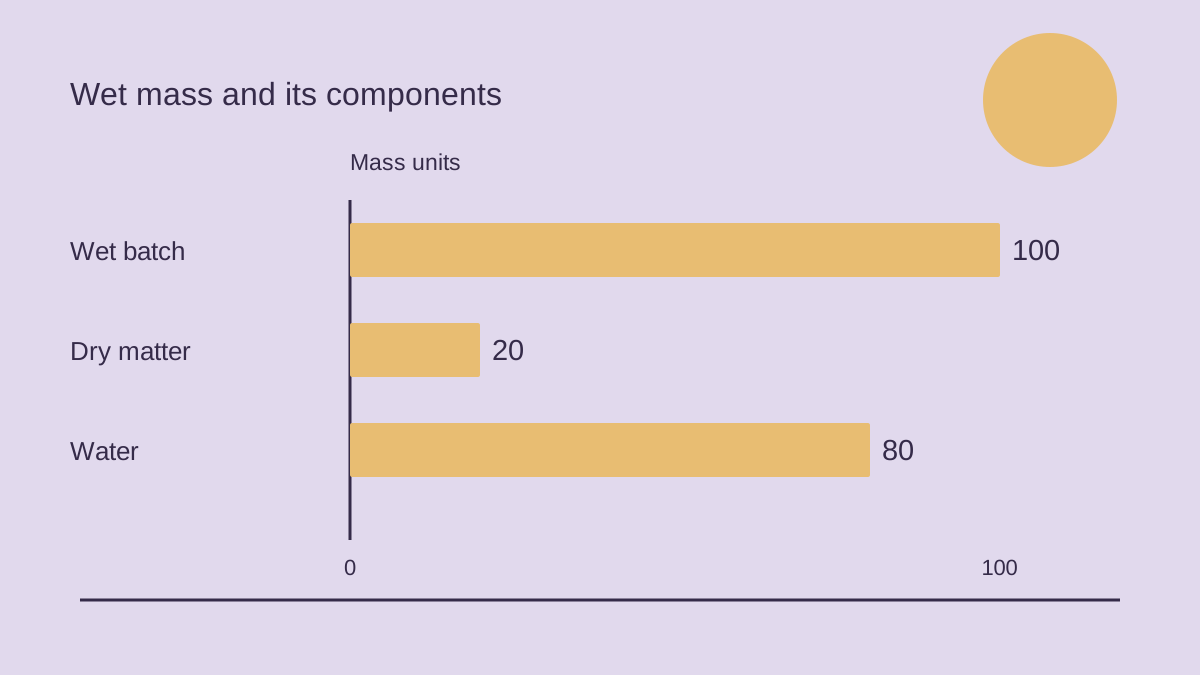
Consider a simplified hypothetical batch weighing 100 units, of which 20 are dry material and 80 are water. If drying removes only the water, the resulting dry material still weighs 20 units. This is an accounting illustration, not a measurement of Gracilaria grown in Sidoarjo. Real evaluations would need the actual product condition and any other mass changes.
A price comparison also needs the same denominator. A price per unit of harvested material cannot simply be placed beside a price per unit of dried product and called an increase. The transaction quantities, costs and accepted output must be included. A clear account helps farmers and buyers see whether processing improves their economic position.
Drying performance should be connected to a sale
An operating assessment would connect each batch's incoming condition, handling time and accepted output. It should record whether the product meets the agreed requirement, rather than treat the use of a drying facility as proof of improvement. The equipment is a means to a commercial result.
The evaluation should also consider when the facility is available. A shared unit could serve several producers, with arrivals concentrated at certain times. Its practical capacity depends on how long batches occupy it and how work is scheduled. A rated capacity without an arrival calendar may say little about the service available to an individual farmer.
If a batch needs further work before acceptance, that work belongs in the cost and timing record. Recording it separately would show whether the first handling stage reliably meets requirements or shifts effort into a later correction. This is a proposed assessment method, not a report that the Sidoarjo facilities have a particular defect.
Cleaning has a yield question as well as a quality question
A cleaning step can remove unwanted material, but its economic assessment should identify the accepted output and the removed fraction. A lower weight after cleaning may reflect a better-defined product rather than poorer performance. The important question is whether the remaining product meets the buyer's requirement and retains sufficient value after processing costs.
The same record should distinguish material removed for a reason from unexplained loss. This would help a manager understand changes between batches. If a reported yield changes, it matters whether the incoming product was different, the requirement changed or the handling process performed differently.
A shared facility can make such comparisons easier if it uses consistent records, but consistency has to be designed. Producers should know what is weighed, at which point and on what basis. An unexplained deduction can create distrust even when a processing stage has a legitimate technical purpose.
Pressing changes logistics, not every quality characteristic
The UNDP statement includes pressing in the observed post-harvest sequence. From a commercial perspective, compacting a product can affect how it is stored and transported. Its value would depend on the buyer's format, the shipping arrangement and the expenses of that handling stage.
The evaluation should avoid using one visible improvement as evidence of every other characteristic. A compact package does not by itself demonstrate product acceptance, traceability or a higher sale price. Each outcome needs its own record or agreement. This allows managers to identify which benefit justifies the equipment.
Handling and dispatch should also preserve the link between a package and its originating lot. If material is combined, the record should make the combination visible. The appropriate degree of detail depends on the transaction, but the purchaser should be able to understand which product was supplied and which description belongs to it.
A quality premium must survive the full cost account
A buyer may pay more for a product meeting a useful specification. Whether the producer benefits depends on the additional revenue relative to the costs of achieving and documenting that specification. Labour, equipment use, transport, rejection and payment timing can all affect the result.
For illustration, suppose the same 20 units of accepted product can be sold at 5 accounting units each, giving 100, or after additional work at 6 each, giving 120. If the additional work costs 15, the difference retained before any other changed expense is 5. These figures are hypothetical and do not describe local prices or a promised premium.
The example shows why a higher unit price is not enough to establish a larger net return. It also shows why the distribution matters. If one organization receives the higher price while another pays the added cost, the partnership needs terms that make the work worthwhile for both.
The cooperative can coordinate an offer
Many producers may have small batches, while a buyer wants a consistent quantity and delivery schedule. A cooperative could coordinate collection, handling and dispatch, but it needs a defined role. It might provide a processing service, market members' products or take ownership of material. Those arrangements have different responsibilities.
Members should understand how quantities are recorded, how charges are applied and how the sale result is allocated. They should also know what happens when a batch does not meet the agreed requirement. Clear terms reduce the risk that a quality decision appears to be an arbitrary deduction from a producer's payment.
Coordination should not erase differences between lots before the organization knows what they mean. If incoming quality varies, combining everything immediately could make a later buyer question harder to resolve. A lot-management approach should match the commercial specification and the cooperative's actual ability to maintain records.
Payment timing is part of the product route
Post-harvest work may extend the interval between harvest and payment. A producer might need to pay for labour or transport before receiving a sale return. The same operation can improve a final margin while making the interim cash requirement harder to manage.
A value-chain assessment should therefore record when each participant pays and receives money. This would help distinguish a profitable route that is difficult to access from one that offers little net benefit. The analysis does not assume that a particular financial product is necessary or that the proposed partnership already provides one.
The buyer's payment terms, the cooperative's member payments and any service fees should be described together. If payment is delayed by an acceptance question, the relevant lot and responsibility should remain visible. Otherwise a handling investment can leave users with an unclear commercial risk that was not apparent in the equipment proposal.
Market access is a sequence of agreements
A larger or more demanding market may require a product description, a sampling arrangement, an agreed shipment format and a reliable schedule. Each requirement should be confirmed with the prospective purchaser. It would be premature to infer a market's acceptance from a successful visit or a statement of sector potential.
The operating team should separate interest from an order and an order from a completed accepted delivery. Those stages provide different evidence of demand. A buyer conversation can guide a trial, but it does not establish the repeat business needed to support a continuing facility.
Access may also depend on how a small producer is represented in the transaction. If a cooperative speaks for several members, it needs authority to agree the relevant terms and a way to communicate them back. This is a proposed commercial arrangement, not a claim that every member in the announced case uses the same sales channel.
Shared equipment needs an operating budget
A capital contribution can create a facility, while electricity, staff, maintenance and administration continue afterwards. A management account should identify those recurring requirements and the source of support. It should distinguish user payments from external assistance so that the long-term service is understandable.
Utilization affects the unit cost of shared equipment. The same fixed expense spread over many accepted batches will give a different result from that expense spread over a few. A forecast should show the expected quantity, scheduling assumptions and periods of low use rather than rely only on a busy demonstration.
Maintenance also changes service availability. The manager needs to explain how planned work is scheduled and how an interruption affects members waiting to process material. These are operating responsibilities that a development proposal should include. The investment partnership mentioned by UNDP is proposed; it should not be described as an already functioning source of recurring support.
Environmental value requires its own comparison
The seaweed development approach is presented within a wider coastal economy context. A commercial benefit and an environmental benefit should nevertheless be assessed on their own terms. A higher sale price does not automatically establish an improvement in the surrounding ecosystem.
An evaluation would need to define which environmental outcome it is examining and how the relevant observations are collected. Changes in pond use, material handling and energy demand may have different implications. The purpose is to make a claim testable, not to assign a numerical benefit without site evidence.
Similarly, a description of productive use should not be extended into an unlimited expansion recommendation. The development of a particular site needs its own resource and environmental assessment. This article considers commercial coordination and product quality, without claiming that every increase in output has been shown to be sustainable.
Skills should be tied to repeatable results
A facility's value depends on people being able to operate its service consistently. Training should therefore connect to the work assigned: receiving lots, recording quantities, conducting the approved handling sequence, preparing shipments and managing payments. Attendance alone does not demonstrate that the service remains reliable.
A practical record could show whether trained staff can produce the agreed documents and follow the organization's procedures under ordinary conditions. It should also identify who supports them when a batch requires clarification. The objective is a capability that survives beyond the demonstration day.
Knowledge needs a handover method as staff change. A cooperative relying on one experienced person's memory may find its records or scheduling vulnerable when that person is absent. Clear instructions and responsibilities can preserve continuity without implying that every possible technical question has already been solved.
The next investment should follow the constraint
A value-chain analysis can help decide where the next contribution is useful. If buyers want the product but batches cannot be prepared consistently, handling capacity or skills may be the relevant constraint. If product meets the requirement but orders remain irregular, another machine may not resolve the commercial problem.
The assessment should identify the evidence supporting that diagnosis. Rejected lots, long waiting times, unused equipment and delayed payments describe different issues. Combining them into a single claim that the sector lacks investment would make it difficult to choose a useful intervention.
A proposed investment can then have a specific acceptance question. What result should change, which participant should benefit and what record will demonstrate it? This creates a basis for evaluation without treating the presence of a partnership proposal as proof that financing has already reached every part of the chain.
A lot record can connect quality to income
A concise record for each lot would help follow the relationship between incoming material, handling and sale. It should contain the product basis, accepted quantities, relevant service costs and the destination of the shipment. The same record can support a response if a purchaser raises a question.
- Identify the producer or group and the originating lot.
- State whether quantities refer to harvested, partly dried or accepted product.
- Record the agreed quality description and the method used to assess it.
- Show handling stages, any removed fraction and the resulting accepted quantity.
- Connect packages and deliveries to the lot or documented combination.
- Record sale terms, service charges and the timing of member payments.
- Keep clarification and rejection outcomes linked to the original record.
The record should be proportionate to the transaction and usable by the people maintaining it. A complicated form that cannot be completed consistently would offer less value than a modest record that follows every relevant lot. Its purpose is to make the commercial result explainable.
Compare batches without changing the question
A comparison between batches should account for differences in incoming condition, buyer requirements and sale timing. A better price could result from a different market rather than a change in handling. A smaller accepted quantity could reflect a stricter specification rather than a loss caused by the facility.
The evaluation should therefore state which question it answers. It might examine whether drying meets a particular requirement more consistently, whether shared dispatch lowers a cost or whether members receive payment sooner. These are distinct outcomes. A clear question makes the evidence more useful to a farmer considering participation.
There is also value in preserving an ordinary comparison route. A proposed improvement should be assessed against what producers would otherwise do, with the same product basis and costs included. This avoids treating every difference after an intervention as its effect and allows the cooperative to identify which part of its service provides the benefit.
Disputes are also a process cost
A quality dispute can erase the benefit of careful preparation if the parties cannot reconstruct the condition of the lot at handover. A cooperative could agree a sampling procedure with its buyer before the first delivery, retain an identified sample where appropriate, and record the measurement method together with the result. These are proposed commercial controls, not evidence that the visited cooperative already uses them. The purpose is to make two measurements comparable, rather than to promise that every disagreement disappears.
The agreement would also specify who can request a second assessment, how long a decision may take, and who bears transport or inspection charges. A consignment awaiting a decision occupies storage and ties up money. The seller should therefore distinguish a sale recorded on paper from cash available to pay members. A small premium accompanied by a long unresolved claim may be less useful than a lower price with clear acceptance and prompt payment.
Members need access to the reason for a deduction. Was it moisture, foreign material, a mixed lot, or a delay after dispatch? Each answer points to a different corrective action. Publishing an understandable explanation allows the cooperative to improve the relevant step without charging every participant for a problem attributable to one batch.
A valuable supply is a repeatable relationship
The Sidoarjo visit illustrates a development approach focused on the steps after cultivation as well as the harvest itself. Its commercial potential depends on connecting quality, shared facilities and an agreed market. The decisive outcome is a product buyers accept repeatedly and a net return that participants can understand.
As of September 2026, the visit and proposed partnership provide a basis for further evaluation, not proof of universal higher incomes. Moving from volume to value requires more than changing the reported weight or adding a machine. It requires a transparent account of the product, the work performed, the expenses incurred and the sale that rewards them.
Sources: ANTARA News; UNDP Indonesia.




Leave a comment