
Parkent's Chashma project adds a village setting to Uzbekistan folk culture and village excursions near Tashkent. The ethno-village was established and operating by Jul 21, 2025. Its origins include a 2022 visit to South Korea, while its programme presents local folk arts, costume and traditions. Other Parkent destinations add foothill accommodation and scientific visits to the regional setting.
The story combines three connected subjects: a new visitor project in Parkent, a stated Korean inspiration, and the landscapes and cultural activities around the capital's eastern foothills. The Korean reference explains part of the project's conception. Chashma's actual setting and public programme remain Uzbek, with their own people, practices and local geography.
The project reported in July 2025
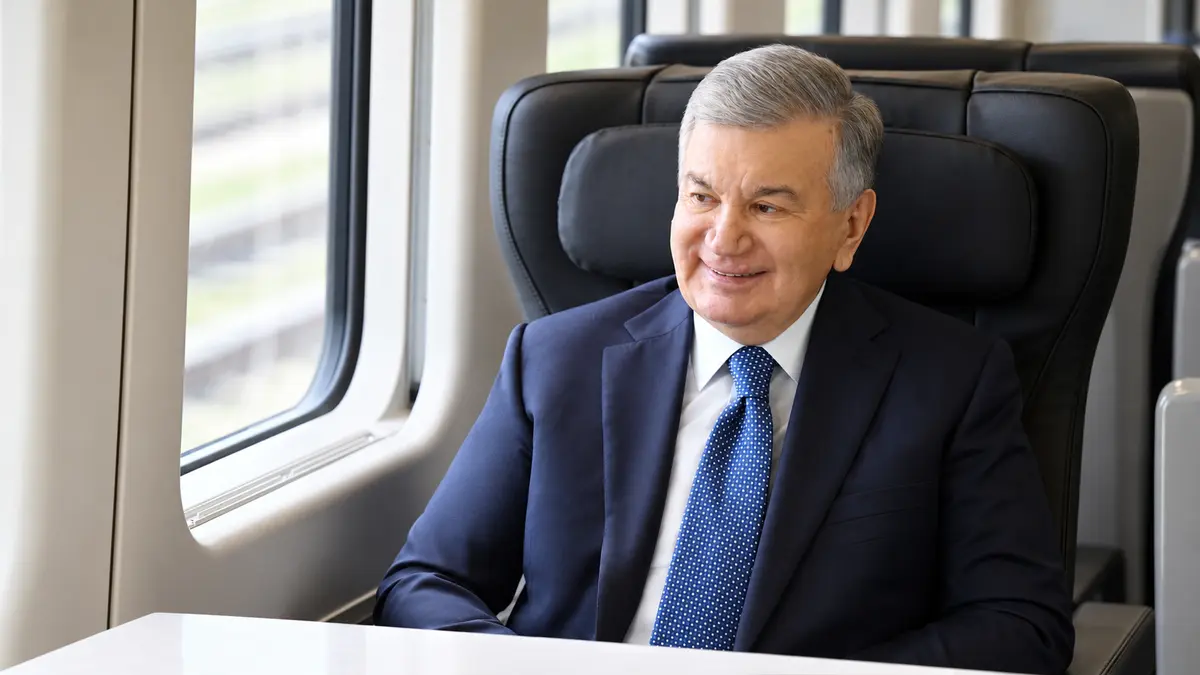
Chashma was established as an operating ethno-village by July 2025. Tashkent regional governor Zoyir Mirzaev had visited Gyeongsangbuk-do and Andong’s Hahoe village in South Korea in 2022. That visit provided part of the project’s background, and President Shavkat Mirziyoyev subsequently approved the initiative. Chashma’s presentation focused on local folk arts, costume and traditions within a village setting near Tashkent.
The opening programme included folk art, costume and visual arts. Media participants visited Chashma and other Parkent-area destinations, including Family Resort Kumushkon and Oltin Bel. MOVE Korea also appeared among the named participants in the visit. These stops formed part of the organised regional programme, alongside the wider development of hotels and visitor infrastructure in the surrounding area.
Chashma was operating when the July 2025 visit took place. Other hotels and visitor infrastructure in the surrounding district belonged to a broader development programme. The completed ethno-village and future facilities therefore occupied different stages of work. The media group’s visit connected several named places within Parkent, with each destination retaining its own facilities and arrangements.
Chashma presents local culture through folk arts, costume and other activities. The project’s buildings provide spaces for that presentation, while individual objects and practices have their own histories. A cultural display can contain clothing, images or craft work, and a performance introduces music and movement. Their makers and uses supply the background to what visitors encounter within the village programme.
Hahoe as the stated Korean inspiration
Hahoe and Yangdong form the UNESCO property Historic Villages of Korea, inscribed in 2010. The clan settlements developed in the fourteenth and fifteenth centuries, with layouts associated with the aristocratic Confucian culture of the Joseon dynasty. Mountains, rivers and agricultural fields form part of their landscape settings. Hahoe was the village visited during Mirzaev’s 2022 trip to South Korea.
The property includes houses, pavilions, study halls and academies, together with different forms of domestic building. This is the historical context of the Korean places named in Chashma's origin story. The World Heritage designation belongs to those defined Korean villages. It is not a designation for Chashma and does not imply that the Parkent project reproduced their buildings or social history.
The Korean visit concerned the presentation of village life in Hahoe. Chashma subsequently developed its own programme around local Uzbek arts, costume and traditions. The two places have different communities and architectural histories. The Korean connection belongs to the conception of the project, while the activities at Chashma take place within the Parkent setting and its local cultural presentation.
Village-based cultural presentation connects the Hahoe visit with Chashma’s development. In Parkent, the programme brings folk performance, costume and visual arts into a named project near the capital. Hahoe retains its own Korean historical and cultural setting. Chashma’s practitioners and exhibits represent the subjects selected for the Uzbek project, with their own materials, skills and traditions.
Folk arts, costume and performance
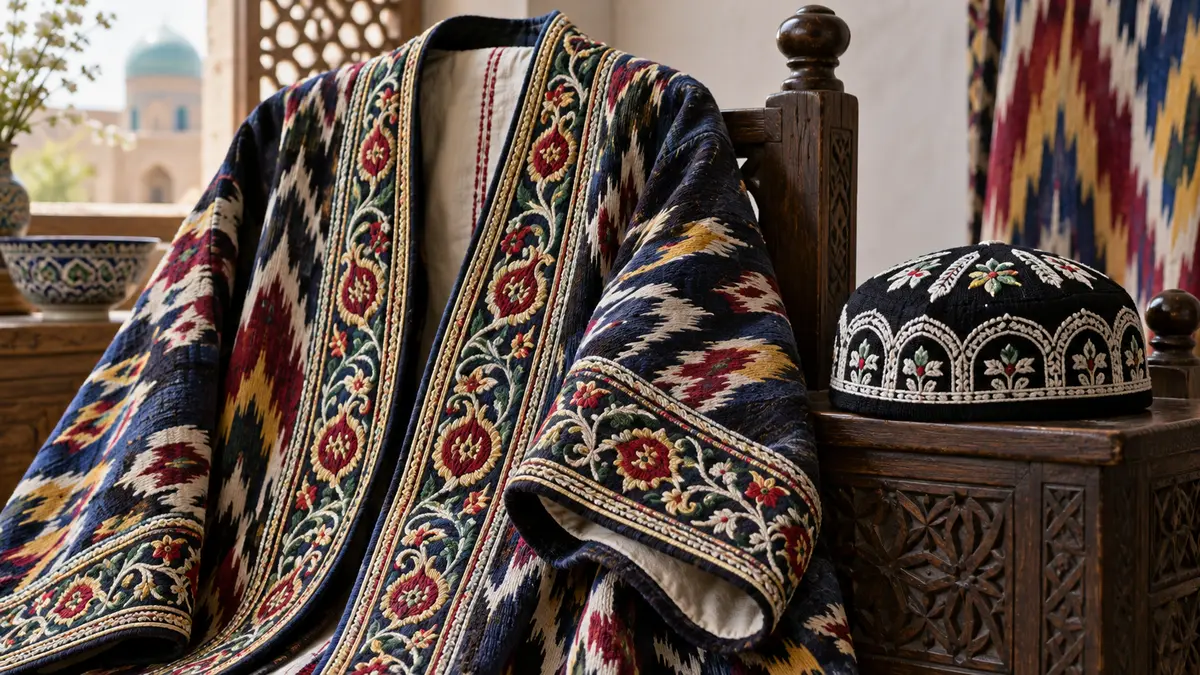
Folk performance, costume and visual arts formed part of Chashma’s opening. Clothing has its own fabric, cut and ornament, while musical performance uses instruments, repertoire and timing. An object display provides another setting in which material and technique can be examined. The programme brought these different practices together, with their respective makers and performers contributing to the public presentation.
In a performance, clothing is encountered through movement. A textile can also be studied separately for its weave or embroidery. Those two encounters reveal different features of the same material. The event’s programme determines whether visitors see a staged presentation, a craft demonstration or an exhibition. Each has its own participants and presentation setting.
Musicians, dancers and embroiderers contribute different skills to folk presentation. Instruments and repertoire occupy a musician’s work, movement and timing a dancer’s, and thread and stitch an embroiderer’s. Costumes connect material work with performance when worn. The opening brought several practices into one cultural programme, with each retaining its own materials, techniques and forms of learning.
Chashma’s July opening presented folk arts, costume and visual activity to visitors. A staged performance takes place through its musicians and dancers, while a display presents objects for looking and interpretation. Later programmes have their own dates and participants. The ethno-village provides the setting for those arranged encounters within the wider Parkent-area visit.
Different kinds of cultural encounter
- A performance presents movement or music during a scheduled interval.
- A demonstration shows a stage of making or preparation.
- An exhibition allows objects and their labels to be examined.
- A participatory session involves an agreed activity led by a practitioner.
These forms can appear together in a village programme, but each needs its own arrangement and explanation.
Kumushkan and the Parkent foothills
Kumushkan is a visitor area in the mountains near Tashkent, with guesthouses, food services and spaces for cultural and creative activity. The resort stop in the Chashma visit was named Family Resort Kumushkon. English spelling varies between the destination and the named property. Both appear within the Parkent foothill context, alongside other places included in regional visits from the capital.
The foothill setting changes the character of an excursion from the capital. A city museum centres on rooms and collections, while a village visit includes streets, courtyards and the surrounding ground. Mountains form part of the landscape, but their presence does not define a particular walking route or establish the distance from every property to a viewpoint.
Agricultural and village tourism in Kumushkan can involve cultivation, food, craft and accommodation. A guesthouse provides a place to stay, while a creative programme supplies its own activity and participants. Meals take place through the kitchen and dining arrangements of the provider. A visit can include several of these settings, with the chosen property and programme identifying what is offered.
A resort, a village street and a working household are separate places. Their connection within an area tour is geographical. A resort's amenities should not be transferred to all homes in the village, and a public road does not give access to a private courtyard. The individual location is the relevant unit for describing facilities and access.
Chashma and Kumushkan belong to the wider Parkent visitor setting. The July visit connected the ethno-village with resort and regional stops, while the foothills provide the landscape around them. The names identify different destinations and facilities. A regional itinerary can connect these places through transfers and individual activities rather than treating them as one combined attraction.
Food preparation and the village setting
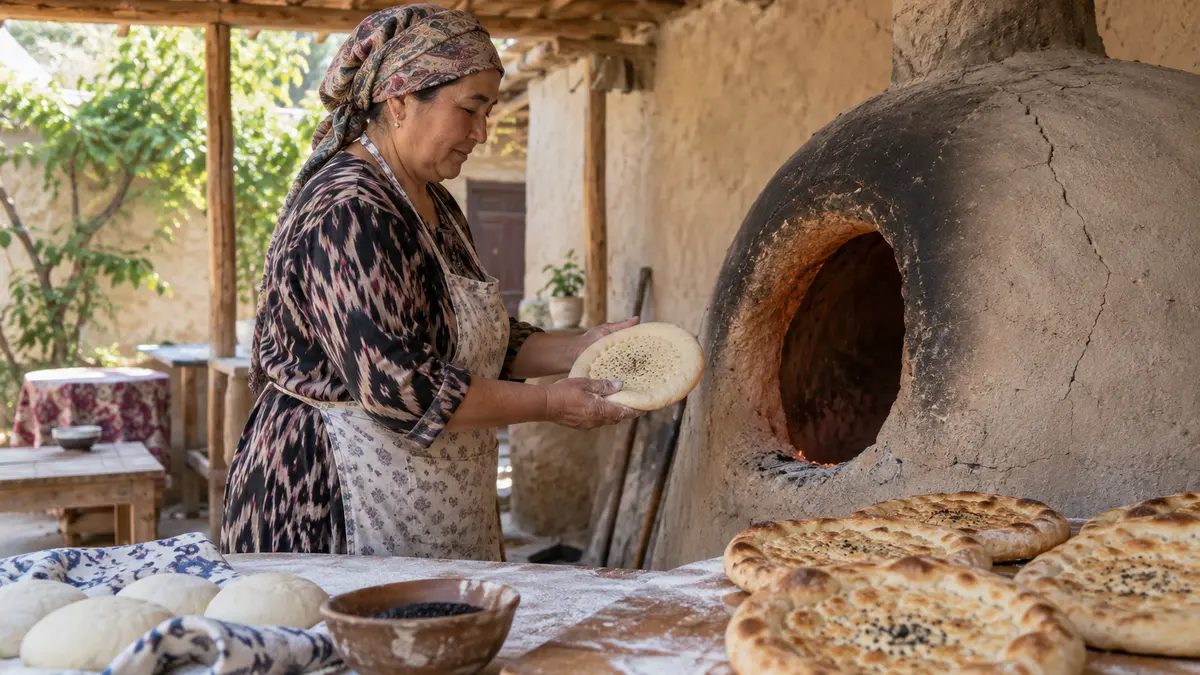
Bread, cooked dishes and tea involve different preparation processes in a village kitchen. A clay tandir holds bread during baking, while a pot or kazan provides another cooking vessel. Dough preparation, shaping, heating and serving occupy stages of the work. A food encounter can show some of those stages or begin with the finished meal, according to the arranged programme.
A tandir is a ceramic oven form also included in UNESCO's description of Uzbekistan's ceramic arts. Its making belongs to pottery knowledge, while its use belongs to cooking. The same object thus connects two activities without making them identical. A potter produces the oven; a cook uses its heat and interior surface for a particular food preparation.
A demonstration of bread baking shows one stage within a longer sequence. Preparing dough, shaping bread, heating the oven, baking and serving have separate timing. A visitor who sees bread being placed inside an oven has not necessarily seen the earlier stages. Describing the observed stage accurately gives more information than calling every kitchen visit a complete cooking course.
Bread preparation introduces another part of a rural cultural visit. Shaping dough and baking in a tandir involve materials, heat and a sequence of work in a kitchen or courtyard. A food demonstration has its own cook and arrangements, while Chashma’s opening programme centred on folk arts, costume and visual presentation. Individual providers determine the meals and activities offered during a later visit.
Regional hospitality also involves space. A courtyard meal differs from food served at a public festival or in a restaurant. The table, serving arrangement and group size belong to a particular setting. An article can describe those forms of encounter without promising that all guests will be served the same dishes in the same surroundings.

Parkent's scientific landscape: the solar furnace
The Physics-Sun solar furnace in Parkent is a scientific facility with a stated power of one megawatt. A field of heliostats directs sunlight towards a large concentrating reflector and a working focus. The mirror field and concentrator form different parts of the optical installation. Its scientific role sits alongside, rather than within, Chashma’s presentation of local cultural traditions.
A heliostat is a mirror system that tracks the sun and directs reflected light toward a selected location. The larger concentrator then brings that incoming light into a smaller area. This is a different use of solar energy from a photovoltaic panel, which converts light into electricity. The furnace concentrates radiant energy for high-temperature work.
The solar furnace has sixty-two heliostats and a stated temperature capability of up to 3,500 degrees Celsius. Those specifications concern the installation’s equipment and working capacity. The individual mirrors direct light towards the concentrator, which focuses energy in a smaller area. A scientific visit follows the facility’s own access route and demonstration programme, separate from the cultural activities at Chashma.
A scientific facility has a working programme and its own access arrangements. A visitor account can explain the principle of concentration and the scale of the installation, while the operator determines the tour route and any demonstration. Inclusion in a Parkent itinerary does not make the furnace an unrestricted outdoor monument.
The contrast in functions adds variety to the regional journey. Chashma presents cultural practices in a village project; the furnace concerns research and equipment; the foothills supply a landscape setting. They are connected by location, while each has its own subject and mode of visiting.
The solar installation stands at an elevation of 1,050 metres. Its heliostats are arranged on a gentle mountain slope and track sunlight towards the concentrator during the working day. The concentrator and mirror field have separate functions within the optical system. Their arrangement occupies a large outdoor setting, with the focused energy used in the facility’s scientific work.
Kumushkan contains guesthouses, restaurants and cultural or creative spaces. These serve different visitor activities: overnight accommodation, meals and an organised programme. The property and provider identify the arrangements for each. A regional journey can combine a stay with food and cultural encounters, alongside travel through the foothills, while individual stops retain their own purposes and locations.
The Parkent journey can thus be described through named locations and purposes: Chashma's cultural project, Kumushkan's village visitor area and the furnace's scientific equipment. Their geographical connection allows an excursion, while each stop retains its own programme and access information.
A cultural extension from Tashkent
A Parkent excursion can be combined with a stay in Tashkent, but the travel segment needs its own current transport information. A reported distance from the capital is a geographical reference, not a guaranteed journey time. The starting point, traffic, destination and final approach all affect the transfer.
The programme also needs to distinguish between a short stop and a longer activity. Looking around a village project, watching a performance, joining a demonstration and visiting a scientific facility occupy different amounts of time. An itinerary that names all of them should specify which encounters are actually arranged rather than leaving the names to imply a complete programme.
Chashma’s operation was documented on Jul 21, 2025, following the Korean visit in 2022 and approval of the initiative. Hahoe and Yangdong have their own older settlement history and World Heritage status. Kumushkan’s visitor services and Parkent’s solar furnace add other regional destinations. Together, the named places span cultural presentation, village accommodation, foothill landscapes and scientific activity near Tashkent.
Local folk culture remains Chashma’s central subject. The Korean visit belongs to its development history, while Uzbek costume, performance and visual arts formed the opening programme. ABA Travel’s cultural and rural routes place such excursions within a wider Uzbekistan journey. A stay in the capital can connect with Parkent-area visits, using the individual destinations and activities arranged for the itinerary.