
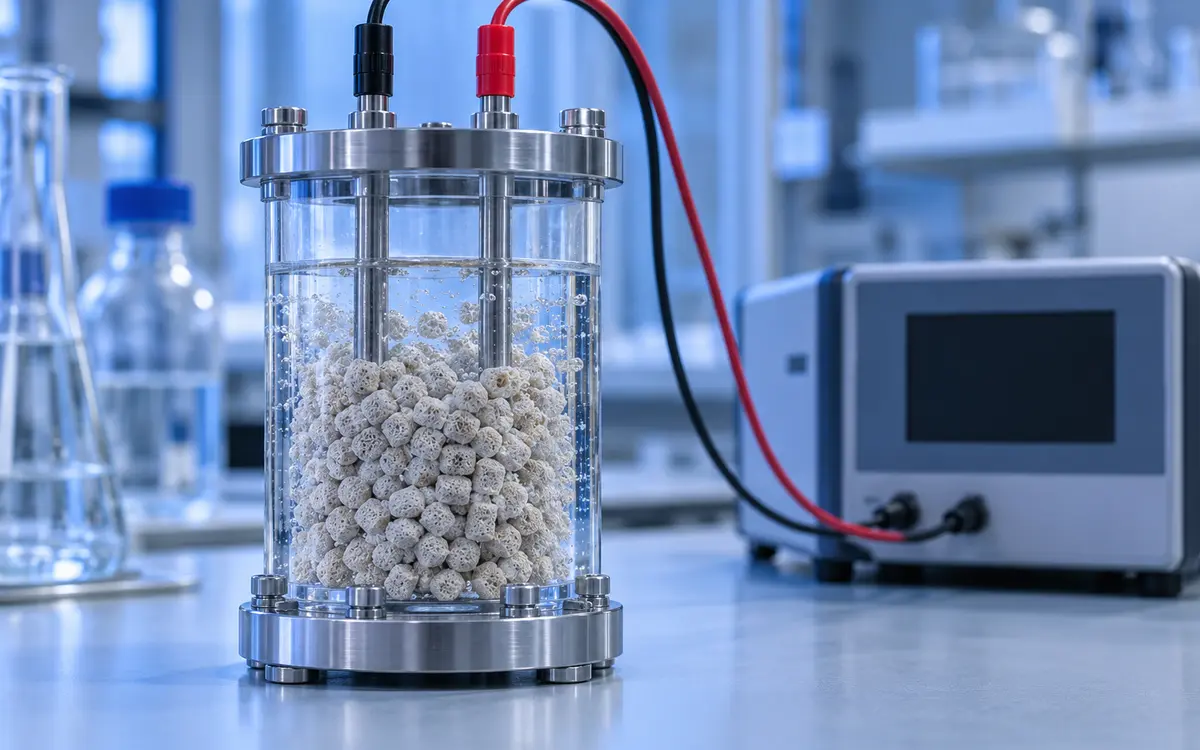
A June 4, 2026 Interfax report describes a proposed generator arrangement from Novosibirsk State Technical University in Russia. It concerns a potential difference associated with groundwater moving through porous material, with possible future use for field instruments. A practical development programme would need to distinguish that voltage observation from energy delivered to an identified load.
Begin with the instrument that needs power
A potential application becomes more specific when the intended instrument and its operating task are identified. A field sensor might have a programme of observations and a separate programme of communication. Those activities would need to be described before a proposed power source could be assessed for that instrument. The historical announcement does not provide a completed instrument trial or a confirmed operating schedule, so neither should be assumed.
A proposed requirements record could state what the instrument must do, when it must do it and what result would count as completion. That record would turn a broad suggestion of powering field equipment into a question that can be evaluated. It would also let a partner distinguish an experiment intended to demonstrate a physical effect from an experiment intended to support a particular field operation. Both can be useful, but they answer different questions.
Keep voltage and supplied energy separate
A record of potential difference would need its measurement conditions. A later claim about delivered energy would require a record of the identified load and the observation period. The proposed programme could preserve these as separate observations rather than treating a voltage reading as a complete account of useful output. No loaded power figure or delivered energy quantity is supplied by the historical report, and this analysis assigns none to the arrangement.
The distinction matters when an application is described in practical terms. An instrument that completes an operating task would provide different evidence from a meter displaying a potential difference. The development team could decide which observation is needed for the next decision and design the record accordingly. A promising voltage observation would remain a reason to investigate, while the instrument question would remain open until the relevant task had been evaluated.
Define the test boundaries
A proposed test could identify the porous material, water arrangement, electrode configuration and measurement procedure. Those details would make the observation interpretable without implying that they describe a finished commercial system. If the arrangement changes between observations, the record could identify the change and explain which comparison is still meaningful. A partner would then be able to follow the evidence rather than rely on a description that combines results from different setups.
The boundaries would also need to say what is outside the test. A laboratory arrangement would not automatically establish conditions in an identified underground formation. Similarly, a short observation would not describe an entire field season. Stating these limits would make the result more useful because it would identify the information needed for a subsequent stage. It would avoid both an unsupported deployment claim and an unjustified dismissal of a limited research observation.
Document the source of water movement
The water movement described in the research creates a question about how the test arrangement obtains and maintains its flow. A proposed energy account could identify the conditions responsible for that movement and any equipment used to establish them. This would prevent the output side of the experiment from being discussed while the input side remains outside the record. The historical report does not establish a complete net energy balance for an operating field system.
If a proposed trial uses a prepared laboratory arrangement, its preparation would need to remain visible in the interpretation. If a later trial relies on natural site conditions, those conditions would need their own observations. The two settings should not be combined into a claim that an underground site will reproduce the laboratory arrangement indefinitely. A programme could instead ask whether a defined site offers conditions relevant to the proposed instrument task and over what period they are observed.
Preserve electrode and measurement identities
A measurement record could identify the electrodes and their placement alongside the instrument used to observe the result. If an electrode is replaced or moved, the change would become part of the record rather than an undocumented adjustment. The historical source itself makes electrode arrangement part of the proposal. An application study would therefore benefit from keeping the arrangement visible when interpreting a comparison between observations.
A proposed control programme could ask which observations help distinguish the intended effect from other features of the measurement arrangement. This is a question for a defined experiment, not a claim that a particular unwanted contribution has been found in the research. The programme could record its controls and their limitations so that a partner understands what the observations do and do not separate. It should not invent an established explanation for a result that has not been reported.
Describe the load before testing it
A loaded-output trial could use an identified test load before considering an instrument handover. The record would state the load and the conditions under which the observation was obtained. If the load changes, the comparison would need to retain that fact. A useful result under one defined load would not automatically establish operation under every other load, or under an instrument whose operating programme has not been specified.
The proposed instrument programme could then be compared with the evidence collected under the test conditions. Where the comparison is incomplete, the missing information would remain an explicit development question. This staged approach would connect a physical observation to a practical task without pretending that an arbitrary load represents all field equipment. It would also help a partner decide whether the next experiment should investigate the generator arrangement or the interaction with an identified instrument.
Use a time account for intermittent tasks
An instrument programme can distinguish waiting, observing and communicating where those activities are part of the intended task. A proposed evaluation could record when useful energy is available and when the instrument requires it. These are separate timelines. Their comparison would need to cover the period relevant to the application rather than rely on a single favourable moment. The historical article does not provide such an operating timeline or establish that an instrument task was completed.
If the programme includes an intermediate storage arrangement, that arrangement would have to be identified as part of the proposed system. Its presence should not be silently assumed when describing direct operation from the research generator. The next test could ask what the complete proposed arrangement actually delivers during the defined task. This would keep a practical application discussion connected to observable performance while preserving the distinction between the research proposal and a qualified power system.
A hypothetical operating-budget comparison
Consider a hypothetical instrument task that requires 10 units of energy during a defined observation period. Suppose a proposed arrangement delivers 12 units at one boundary, but only 8 units are recorded at the instrument boundary. These invented quantities are not results from the Novosibirsk work. They illustrate why a result at one measurement point cannot be substituted for the energy available at another point without a complete account of the intervening arrangement.
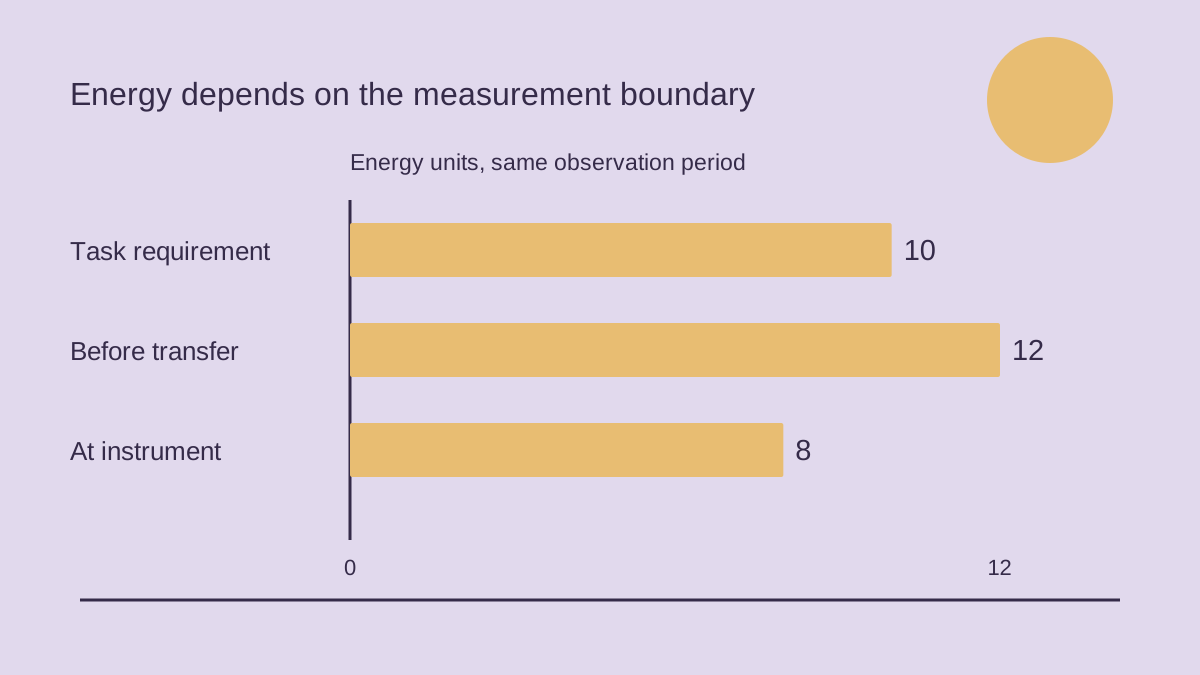
The example would not establish a failed or successful generator. It would identify which boundary is relevant to the proposed task and which measurements would support the decision. If the task or the observation period changes, the comparison changes too. An application programme could therefore preserve both the generator-side observation and the instrument-side observation. The central issue would be whether the defined task is supported under the conditions being considered, rather than whether one isolated number appears larger than another.
Make site conditions part of the evidence
A prospective site trial could record the location and the conditions relevant to the proposed water movement. The same site name alone would not establish that conditions are unchanged between observations. A partner could identify which conditions the trial is intended to cover and which remain outside its scope. This is a proposed documentation approach; it does not assign unreported properties to any underground formation or claim that a specific site has been qualified.
Site evidence would also need an observation period appropriate to the question being asked. A result obtained during one period could support a limited conclusion about that period. A broader operating claim would need broader evidence. Keeping the period attached to the observation would prevent a successful short test from becoming a guarantee of indefinite supply. It would also make the next question clearer if the proposed application depends on conditions that the initial trial did not cover.
Keep repeated trials independent
A development programme could distinguish repeated readings of one arrangement from separately prepared trials. Both can contribute useful information, but they do not provide the same evidence. Several readings from one unchanged setup can describe its observation period; separately prepared arrangements can help investigate whether the preparation is reproducible. An industrial partner would benefit from knowing which kind of repetition is represented in the record.
Each trial could retain an identity linking its preparation, conditions and observations. A trial with a different electrode arrangement or material should not be silently counted as a repetition of an unchanged procedure. Instead, its differences would become part of the comparison. This would let a partner evaluate whether a promising observation supports a defined development route, while avoiding an unsupported claim that every arrangement or location will produce the same useful output.
Define a decision before the next field commitment
A proposed decision gate could identify the question to be answered before equipment is committed to a site. It might concern an observation under a defined load, a record of relevant conditions or completion of a specified instrument task. The gate would not need to promise deployment. It would identify the evidence that makes the next step meaningful and the limitations that remain after the gate is passed.
- Identify the instrument task and the period for which power is required.
- Keep potential-difference readings separate from energy delivered under an identified load.
- Record the conditions and inputs responsible for the test's water movement.
- Preserve electrode, material and measurement identities across comparisons.
- Require site-specific evidence before broadening a laboratory observation into a field claim.
These are original proposals for structuring a development discussion. They are not reported university procedures or regulatory requirements. Their purpose is to make the next commitment depend on an identifiable observation rather than on the broad appeal of obtaining energy from groundwater. A research group and an industrial partner could adapt the structure to the actual experiment while leaving untested claims unresolved.
Retain interruptions and unexplained changes
A trial record could preserve interruptions, uncertain readings and changes that occur without a clear explanation. Omitting those observations would make it difficult to assess the conditions under which the arrangement is useful. A repeated measurement could then address a specific uncertainty rather than become a search for a favourable reading. Where the uncertainty remains, the record could say so and identify the limited question for the next investigation.
An interruption also creates a question about the proposed instrument task. The programme could record whether the task was completed, delayed or left incomplete under the defined conditions. This would not imply that the research arrangement has already been assessed for reliability. It would provide a way to investigate that application question without claiming an uninterrupted field power supply from the historical announcement. The distinction would be particularly useful when a partner considers an operation with a fixed observation window.
Compare alternatives on the same task
A practical assessment could compare the proposed arrangement with another way of supporting the same identified instrument task. The comparison would need common boundaries, an appropriate observation period and a description of the equipment included. A cost comparison based on one arrangement's complete operation and another arrangement's isolated component would be incomplete. This analysis does not assign a cost advantage, an environmental benefit or a replacement capability to the research proposal.
The alternative comparison could remain useful even if no single arrangement is superior in every setting. It could show which uncertainties matter for a defined operation and what evidence is needed before choosing. A proposed groundwater arrangement might warrant a limited trial without justifying a general replacement claim. The decision would depend on the task and observed conditions, rather than on treating the physical effect as proof of universal usefulness for field equipment.
Connect the proposal to a measurable next step
The reported arrangement creates a specific development question: whether a potential difference associated with water movement can support useful output under a defined load and an identified operating context. That question can be investigated without assuming a commercial generator, a completed field deployment or a net energy benefit. Preserving the research observation and its limits would make the proposal a clearer starting point for such work.
The most useful next record would connect the arrangement, the source of water movement, the measurement boundary, the load and the instrument task. It would allow a partner to follow the reasoning from a physical observation to an application test. A successful next stage would then mean that a defined question had been answered with relevant evidence. It would not turn every remaining issue about sites, operating periods and complete-system performance into an already resolved matter.
Sources: Интерфакс Россия.


Leave a comment