

An October 13, 2025 Interfax report describes a prototype bentonite-clay catalyst from Novosibirsk State University in Russia. The proposed applications include organic synthesis and, prospectively, purification of petroleum products and vegetable oils. The report also describes an expectation of regeneration and longer service. The industrial question is how that expectation would be assessed through a complete record of usable working cycles.
Begin with one application question
A catalyst development programme can become more specific when it identifies one intended application and the result required from it. A proposed trial for an organic-synthesis question would not automatically answer a purification question. The historical report identifies several possible uses, but it does not provide a completed commercial qualification for every use. A partner could therefore define the next application question before deciding what sample or information is needed.
The application record could identify the material being assessed, the intended result and the comparison against which that result would be interpreted. This is a proposed planning structure, not an operating recipe or a description of an existing customer programme. Its purpose would be to connect the promising prototype to a decision that can be reviewed. Without that connection, a general claim about a versatile catalyst would be difficult to turn into an interpretable industrial evaluation.
Define the accepted result
A useful trial would need an agreed description of what counts as an accepted result. That description might concern the output of the defined application, rather than the presence of a catalyst sample alone. The programme could keep the material assessment and the application assessment separate so that a favourable observation on one side does not silently establish the other. The historical article does not specify acceptance criteria for a particular customer's process.
A partner could state which observations are needed before proceeding to another trial and which questions would remain open after that decision. Early acceptance could then have a limited purpose without being presented as approval of recurring supply or every possible operating context. This distinction would preserve the value of development evidence while preventing a prototype announcement from becoming a claim that the complete application is already qualified.
Keep the reference material identifiable
A comparison would need an identified reference and a record of the conditions under which it was evaluated. If the reference changes, the new comparison would answer a different question. A team could preserve the previous reference alongside the revised one rather than combine results under a general description of alternatives. The historical claim of a possible alternative to other catalysts does not provide a complete industrial comparison against every product a customer might currently use.
The reference record could also distinguish an initial material from material assessed after a defined working interval. This would make it possible to see whether the programme is comparing fresh samples, previously used samples or material after a regeneration step. Those are different comparisons. Keeping them visible would support a clearer decision about the prototype's proposed role without assigning unreported performance to any of the samples.
Separate recovered activity from service life
The prospect of regeneration creates an important development question, but it does not by itself establish a complete service-life record. A programme could identify the working interval before regeneration, the regeneration event and the evaluation that follows it. A favourable result after one event would remain evidence about that event. A wider claim about repeated service would require records covering the wider sequence under defined conditions.
The distinction matters when a catalyst is described as reusable. The description could identify what has actually been observed and the cycles that remain to be evaluated. It should not turn an expectation of restored material characteristics into an unlimited operating claim. This analysis proposes a way to investigate that expectation; it does not report a measured number of successful cycles or assign a commercial lifetime to the university prototype.
Give every working interval an identity
A proposed cycle record could connect a material identity to each working interval and the evaluation associated with it. If material is replaced, combined or set aside, the change would remain visible. Otherwise, a sequence described as repeated use might include new material without making that fact clear. The industrial partner would need to understand which physical material produced which observations before interpreting the sequence as evidence of continued service.
The record could also identify interrupted intervals and intervals that did not produce an accepted result. Retaining those outcomes would make the sequence more useful than a list containing only favourable cases. It would help a partner ask whether regeneration supports a repeatable application programme, rather than whether one selected observation looks promising. The historical article does not provide such a complete cycle history, and this analysis does not invent one.
Use a hypothetical cycle-account example
Consider a hypothetical programme that schedules ten working intervals with the same identified material. Suppose seven intervals produce an accepted application result, two require additional assessment and one remains incomplete. These invented counts are not results from the Novosibirsk project. They illustrate why ten scheduled intervals should not automatically be described as ten successful service cycles. The counting rule would need to preserve the outcome of each interval.
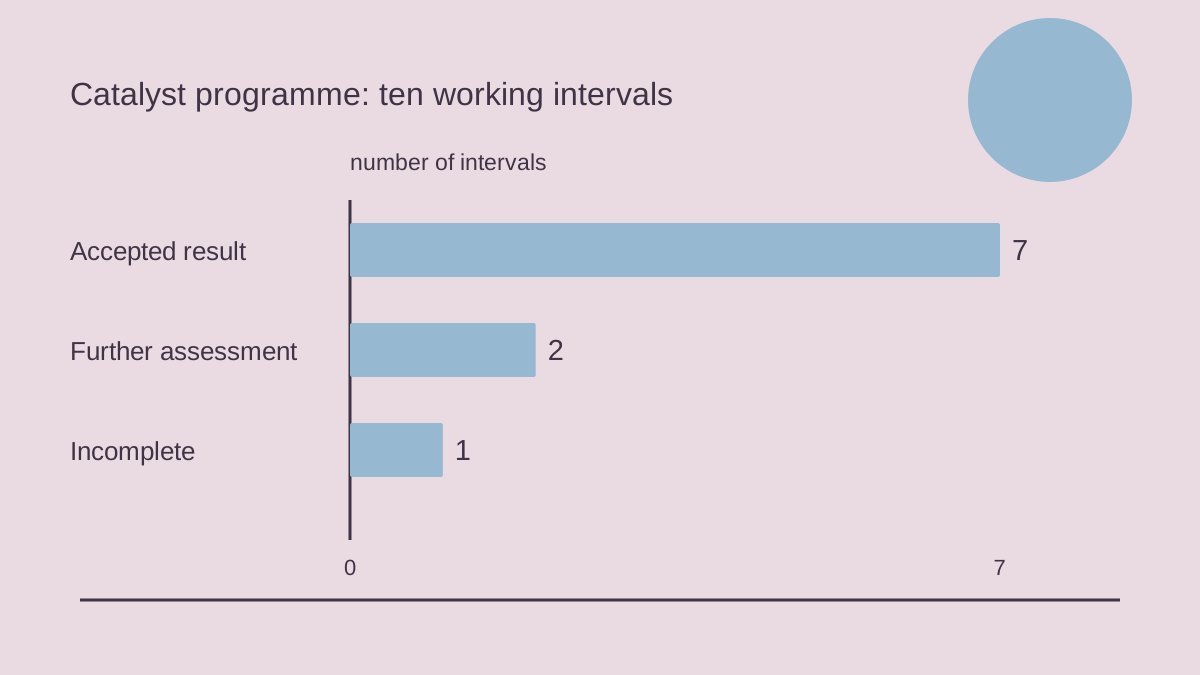
If the same hypothetical programme records several regeneration events, the number of events would still differ from the number of accepted working intervals. An event could prepare material for another evaluation without establishing its subsequent result. The example does not estimate the prototype's performance or prescribe a regeneration method. It shows why an industrial account needs separate identities for the working interval, the regeneration event and the acceptance decision.
Include the complete regeneration interval
A prospective time account could distinguish active treatment from the complete interval during which material is unavailable for the next intended use. The record would identify the stages included in its boundary rather than assume that a named treatment duration covers every relevant activity. This is a proposed accounting question. No treatment settings, equipment requirements or measured turnaround time are assigned to the research.
The same boundary would matter when comparing an arrangement with a proposed alternative. A time comparison using one arrangement's full cycle and another arrangement's isolated operation would answer an incomplete question. A partner could retain both the limited operation measurement and the complete cycle record, with their purposes stated separately. That would allow a promising regeneration prospect to be examined without converting it into an unsupported claim of shorter plant downtime.
Count accepted output before estimating cost
A development cost discussion could identify the accepted application output associated with a defined sequence of working intervals. The number of catalyst samples or regeneration events would not necessarily provide the denominator relevant to that discussion. The record could show which output was accepted, which remained under review and which was excluded. This would make the proposed cost comparison interpretable without asserting that the prototype already has a commercial production cost.
A complete comparison could also state which activities and materials are included in the cost boundary. An apparent saving based only on the purchase of a starting material would leave other questions unresolved. The historical report discusses a prospective alternative, but it does not establish realised customer savings. This analysis therefore proposes the evidence needed for a comparison rather than supplying an invented price, operating margin or economic advantage for the prototype.
Keep feed and material changes visible
A proposed application trial could record the identity of the material being processed and the identity of the catalyst sample. If the input changes between working intervals, that change would be attached to the comparison. A favourable result under one defined input would not automatically establish the same result under another. The programme could retain the original observation while asking what additional evaluation is needed for the changed application conditions.
The catalyst material could change as well. A preparation revision would need a record linking the new sample to its revised description. Results from several revisions should not be silently treated as the service history of one unchanged material. Preserving these identities would help a partner investigate whether a promising regeneration observation supports a repeatable programme and which conclusions apply only to a particular preparation or input combination.
Set a defined next-stage gate
A staged programme could identify the evidence required before the next development commitment. A gate might concern an accepted application result, a traceable cycle sequence or a complete comparison boundary. The purpose would be to answer an identified question rather than promise eventual commercial success. A mixed result could still support a useful decision if the team understands which uncertainty was reduced and which questions remain open.
- Identify one application and the accepted result sought from its trial.
- Preserve the reference material and the conditions of comparison.
- Separate working intervals, regeneration events and acceptance decisions.
- Count accepted output within a complete time and cost boundary.
- Keep input changes and catalyst revisions attached to the observations they affect.
These proposed checks are an original structure for reviewing development evidence. They are not reported university procedures, customer specifications or regulatory requirements. A group and an industrial partner could adapt them to the actual programme. Their usefulness would lie in making the regeneration discussion depend on a record that can be interpreted, instead of treating the word reusable as a complete industrial qualification.
Plan the sample handover
A prospective sample handover could identify the material, the preparation record and the limited question that the receiving partner intends to evaluate. That information would connect the physical sample to the development programme. A handover without an agreed question can produce interesting observations that nevertheless cannot be compared with the original result. A more defined handover would make the next evaluation useful without implying a commercial supply arrangement.
The participants could also agree how the receiving partner records changes and returns observations. A sample altered after receipt should retain a record of that alteration, so that its result is not silently attributed to the original preparation. This is a proposed collaboration structure, not a claim that the research group already provides a defined service. It would preserve the reasoning from the prototype description to the evidence used for the next development decision.
Retain uncertain and disputed results
A cycle programme can produce disagreement about whether an application result meets the proposed description. The record could retain the original observation, the reason for disagreement and the review used to resolve it. A later decision would remain connected to that history. This would make the programme more reviewable than a record in which disputed cases simply disappear or are replaced by a favourable repetition without explanation.
An uncertain result should not automatically be described as either a failed catalyst or a successful service cycle. Its limited meaning could remain explicit while the next trial addresses an identified question. A partner would need that uncertainty as well as the favourable observations when considering a wider commitment. The historical announcement does not supply a complete uncertainty account, and this analysis does not claim that such an account has already been completed.
Separate raw-material availability from qualified supply
The availability of a starting material and the availability of a qualified catalyst are different questions. A proposed supply discussion could identify the required catalyst description, the intended application and the quantity under consideration. Those details would require separate confirmation rather than an inference from a broad statement about raw-material resources. The historical report does not establish customer allocations, recurring supply quantities or an accepted commercial specification.
A development partner could distinguish a research sample, an application trial batch and recurring supply. Each would involve a different commitment and different evidence. Keeping them separate would preserve the usefulness of the prototype announcement while avoiding a claim that all industrial demand can already be met. The next step could remain a limited evaluation, with its results used to decide whether a broader preparation or supply programme is justified.
Build the service case from a complete record
The regeneration prospect is most useful when connected to an application result, an identified material and a traceable sequence of working intervals. Such a record would let a partner investigate whether the proposed catalyst supports useful repeated service. It would retain the promise of the research without assuming an unlimited lifetime, measured customer savings or completed qualification for every application mentioned in the historical source.
The next practical record could connect the prototype, the chosen application, the reference comparison, the regeneration events and the accepted output. A wider industrial conclusion would then depend on evidence gathered for that purpose. The central development question remains specific: whether a promising regenerable material can support an application programme whose usable cycles, complete costs and remaining uncertainties are visible enough to guide the next commitment.
Sources: Интерфакс Россия.





Leave a comment