
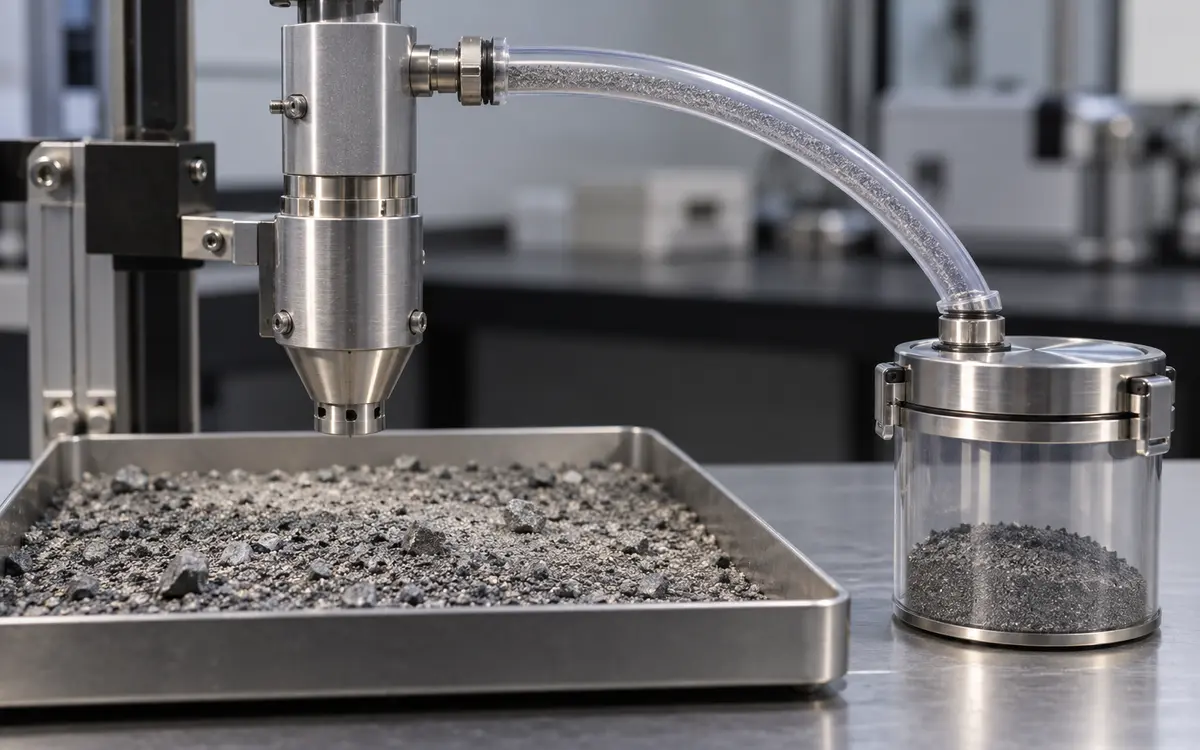
A compact instrument called Lunar PlanetVac is being prepared to demonstrate a different way of gathering soil on the Moon: using compressed gas to move particles into a container. Forbes reported the planned test on 9 January 2025. The experiment is due to travel on the Blue Ghost lander operated by Firefly Aerospace, with launch then targeted for 15 January.
Gas jets instead of a digging arm
NASA's technical description explains that one set of jets will disturb material beneath the sampling head, while another will direct it into a transfer tube. The instrument carries its own gas. It therefore does not depend on an atmosphere surrounding the Moon in the way a familiar household vacuum cleaner depends on the air around it.
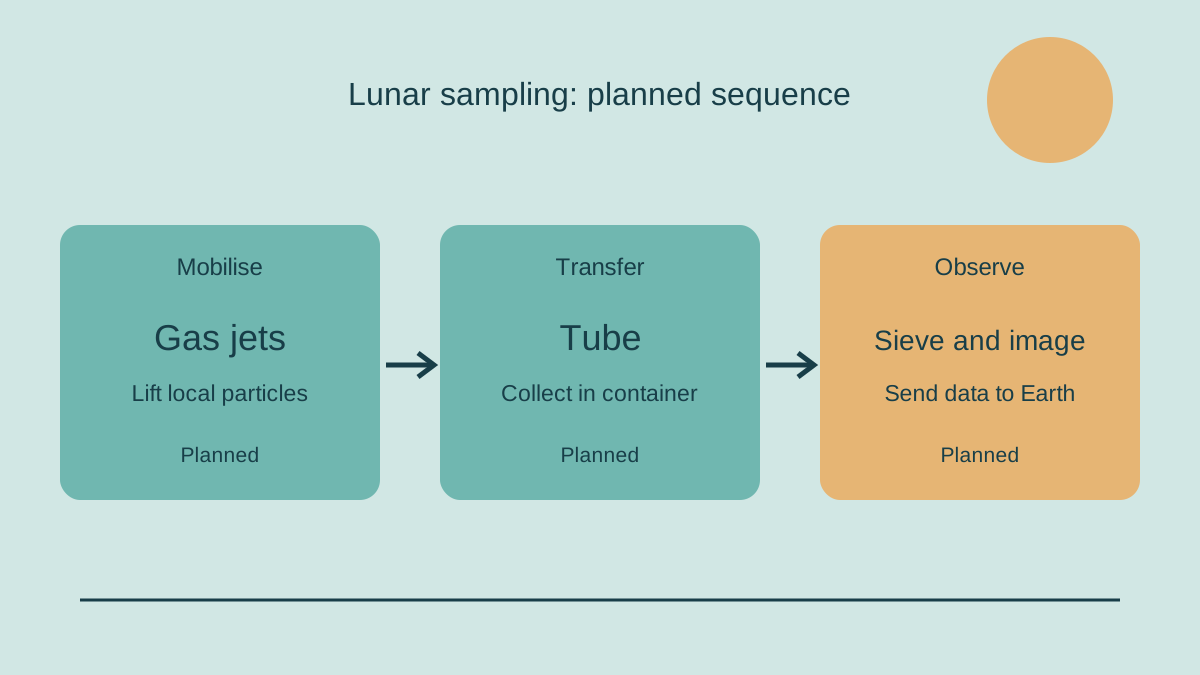
The agency expects the autonomous collection step to take seconds. Material inside the container is to be sieved and photographed, with information transmitted to Earth. This is a collection-and-observation experiment on the lunar surface; it is not an announcement that these samples will be brought back to Earth on the same flight.
A demonstration with a defined purpose
Honeybee Robotics, a Blue Origin company, developed the instrument. NASA places it among ten scientific and technology payloads on the lander under its commercial lunar delivery programme.
- The sampling head must mobilise nearby surface material.
- The transfer system must deliver that material to the container.
- The observations must show what the instrument actually collected.
Separating those steps makes the result easier to interpret. Movement of dust near the head alone would not establish successful collection, while material arriving in the container would not answer every question about how representative the sample is of the surrounding surface.
Launch plans are not test results
As of the report's publication, the experiment had not yet conducted its planned lunar demonstration. The announced timetable describes a future flight and subsequent work. Successful operation could inform later sampling designs, but the January announcement contains no lunar performance measurements. The immediate milestone is delivery of the instrument; the evidence for its usefulness will come from the collection sequence and the data returned afterwards.


Leave a comment