
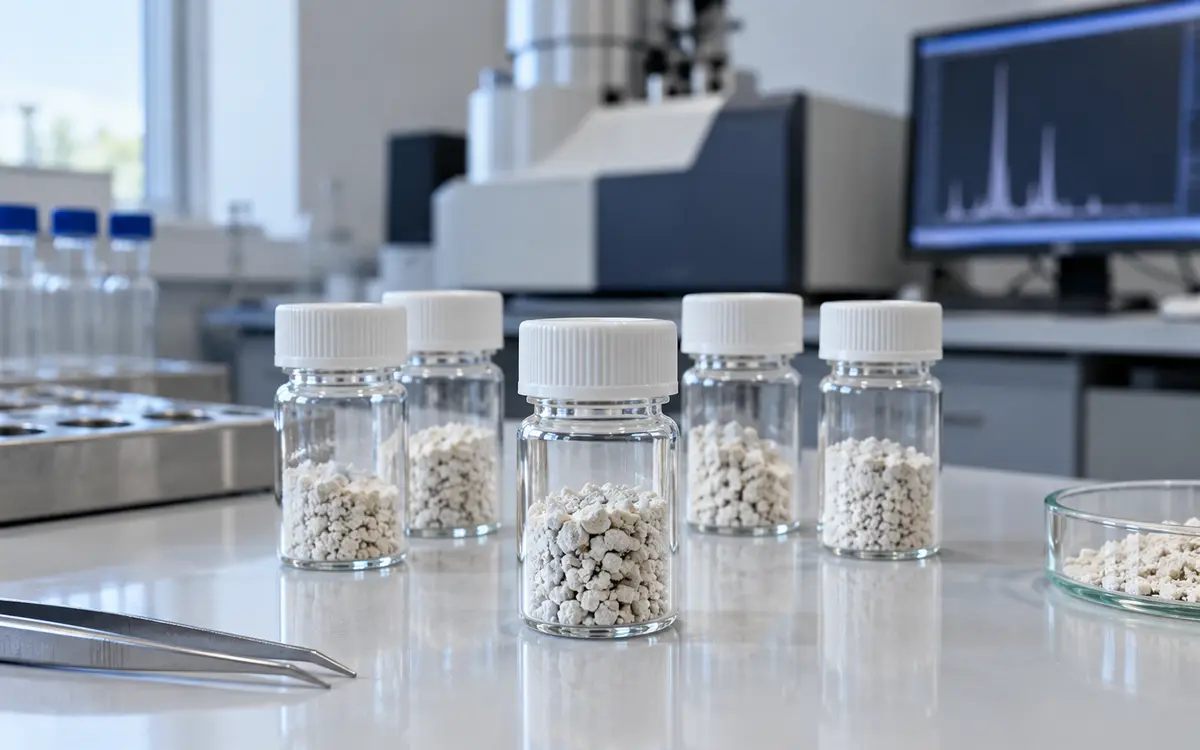
Researchers in Russia have reported a method for producing a sorbent intended to remove uranium from wastewater. Interfax reported the development on 28 January, citing the science ministry. The work concerns material research, with industrial applications described as prospective.
A collaboration focused on contaminated water
The project brought together Far Eastern Federal University, the Kurchatov Institute and two institutes of the Russian Academy of Sciences specialising in physical chemistry and electrochemistry, and general and inorganic chemistry. The researchers identify wastewater from nuclear-fuel-cycle enterprises as a possible application.
That intended use gives the announcement an environmental focus. It does not mean that a named treatment plant has already adopted the material. The report identifies a research direction rather than a completed commercial installation.
Understanding the material through measurements
The ministry's fuller account explains that the team used measurements from the KISI-Kurchatov synchrotron source. X-ray absorption spectroscopy helped establish the chemical state and atomic surroundings of uranium retained by the material. Researcher Nikita Ivanov linked these observations to understanding the sorption mechanism and proposing improvements to the sorbent.
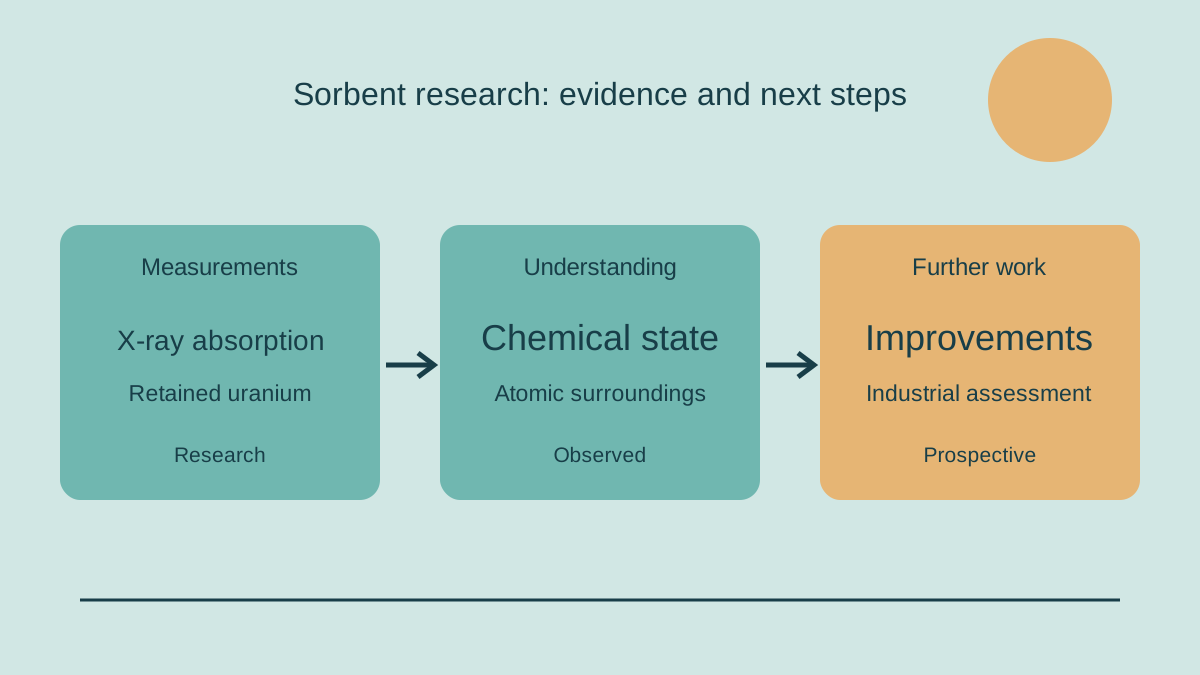
The significance is the connection between a material's observed behaviour and evidence about the retained element. Instead of presenting only a claim that the material captures a contaminant, the account describes an attempt to understand that interaction. Such understanding can inform further development, while remaining distinct from proof of performance at an operating treatment facility.
What the announcement does and does not establish
- A collaborative research project and a proposed material-development method are reported.
- Synchrotron measurements supplied information about the retained uranium.
- Practical wastewater applications are presented as a future possibility.
The public accounts do not provide a complete industrial operating assessment. They do not establish a treatment cost per unit of water, service life in a working installation or an independently verified removal rate for a specified industrial stream. Those omissions should not be filled with assumed figures.
For readers following environmental technology, the immediate result is therefore a research step supported by measurements. Whether it becomes an industrial treatment option will require evidence beyond the announcement; neither the involvement of large institutions nor a promising description alone settles that question.
Sources: Интерфакс Россия; Минобрнауки России — официальный материал, предоставленный AK&M.



Leave a comment