
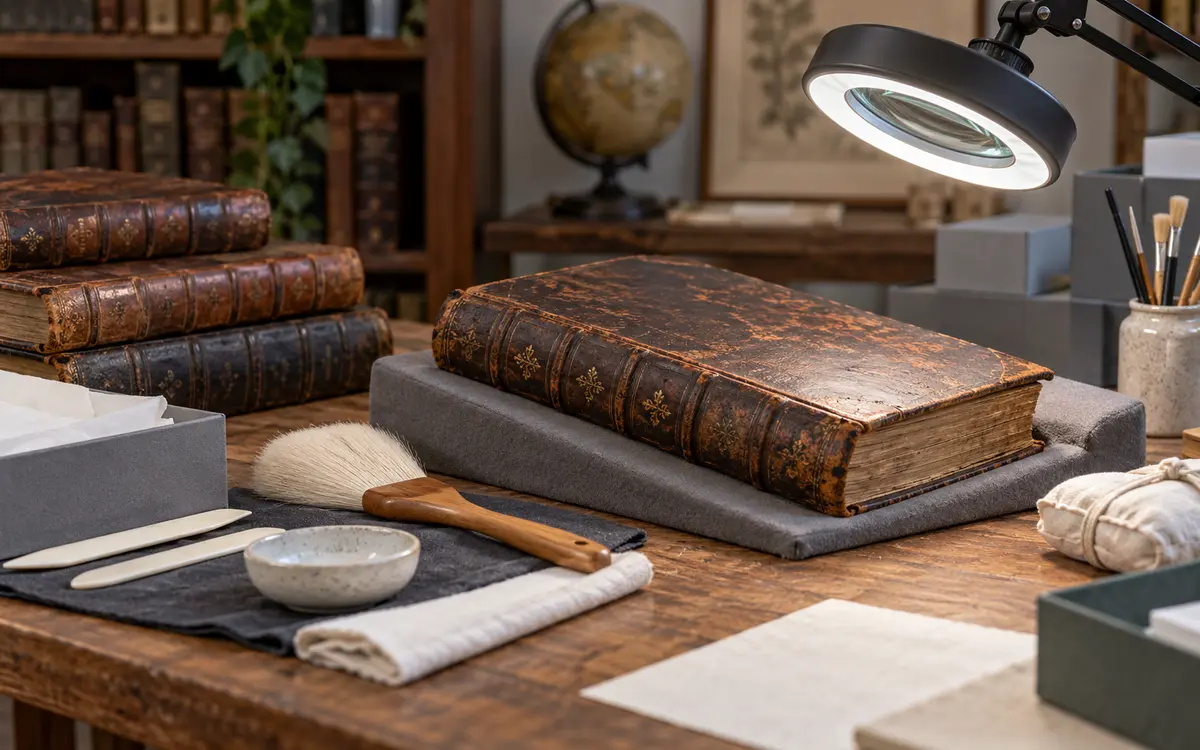
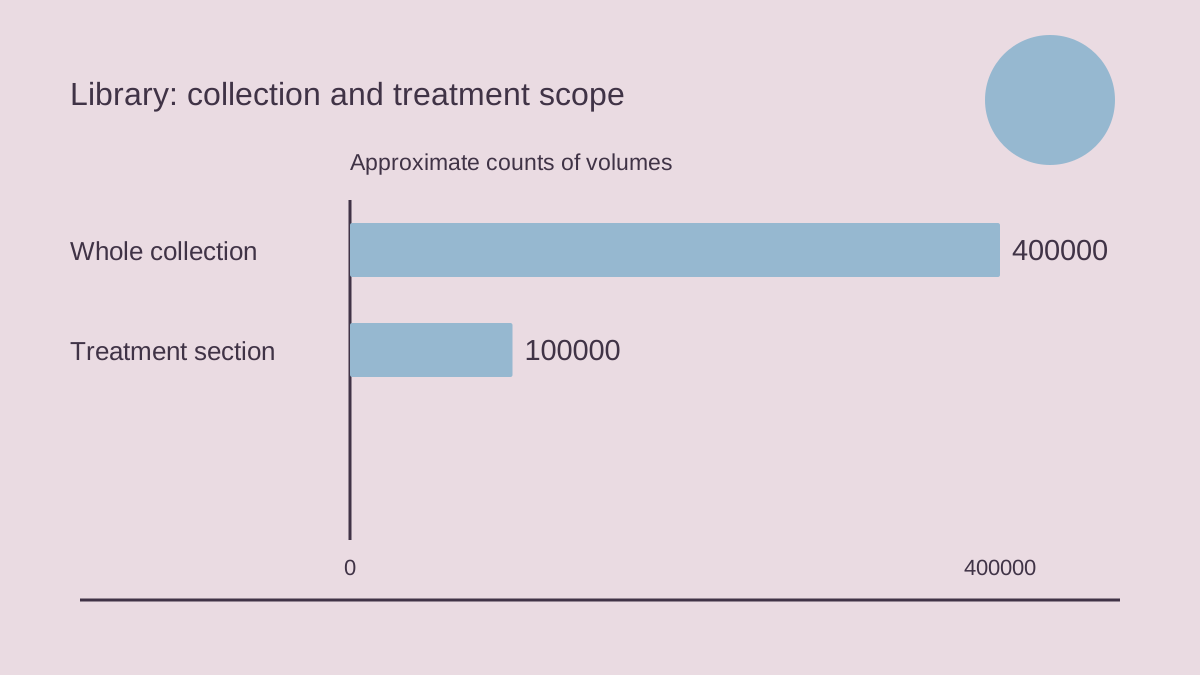
Conservators at Pannonhalma Archabbey in Hungary are moving around 100,000 books from their shelves after a beetle infestation. Euronews reported on 13 July that the affected section represents roughly a quarter of the library’s 400,000 volumes. Books are undergoing specialist treatment, with individual inspection and cleaning planned before reshelving. Damaged volumes will require separate restoration. The abbey hopes to reopen the library in early 2026; that remains a target, rather than a confirmed result.
A collection within a changing historic complex
The monastery’s long history should not be confused with the age of every room. UNESCO dates its foundation to 996, but identifies the four-level library building as a construction completed in two stages between 1824 and 1835. The World Heritage property, inscribed in 1996, includes religious and educational buildings as well as gardens and surrounding landscape. Its significance rests on the development of a living monastic institution, rather than the survival of one unchanged building.
Three different conservation milestones
The rescue operation brings together tasks that answer different questions:
- Controlling the infestation addresses the immediate threat.
- Inspecting a volume establishes its individual condition.
- Restoring damage concerns the usability and physical integrity of that particular book.
These distinctions explain why the number of books selected for treatment cannot be read as a count of books beyond repair. Equally, completing a treatment stage would not by itself demonstrate that every damaged volume is ready for readers. A collection-wide operation and an individual restoration decision have different purposes.
What reopening would need to clarify
For researchers, a useful future update would identify which part of the collection can again be consulted and which material remains under care. For visitors, access to a historic interior is a separate question from access to the books it contains. The reopening target should therefore be understood in relation to the service eventually announced, rather than as a promise that every activity will restart at once.
The practical value of the operation is in preserving both objects and the possibility of using them. Its progress will be clearer when reports distinguish material treated, material assessed and material returned to service.
Sources: Euronews; UNESCO’s historical description.
Sources: Euronews; UNESCO World Heritage Centre.




Leave a comment