
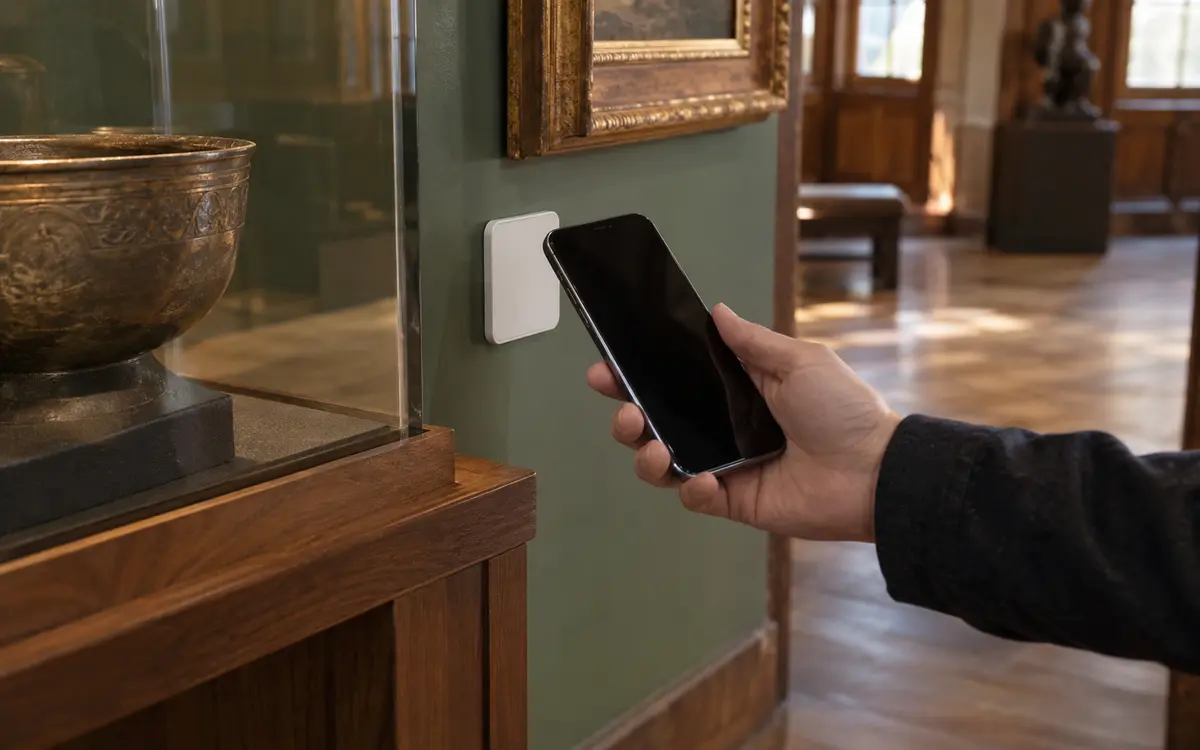
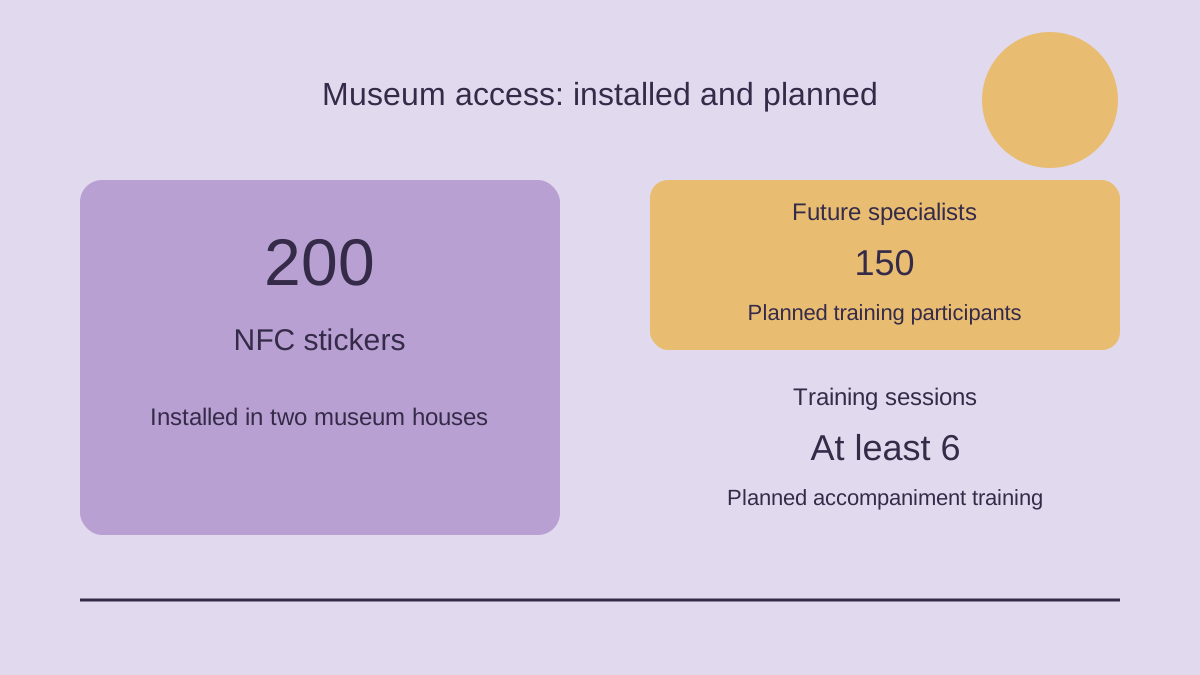
The Irkutsk Decembrists Museum in Russia has installed 200 NFC stickers to give blind and partially sighted visitors access to descriptions of its exhibitions. Interfax reported on 17 June that the devices were placed in the Volkonsky and Trubetskoy houses. Bringing a smartphone close to a sticker allows a visitor to obtain information about exhibits and museum spaces.
Descriptions and personal assistance
The initiative combines an installed information system with a programme that is still being developed. Irkutsk State University says 150 future specialists will take part in at least six training sessions on accompanying blind and partially sighted people. The university identifies third-year social sciences student Tatyana Bizimova as the project author and says she received a grant at the previous year's Baikal forum.
The plan also includes adapting the route between the two houses. This separates three practical elements of a visit:
- Access to the description of an object or room.
- Support from people trained to accompany visitors.
- The connection between the two museum locations.
These elements serve different needs. A spoken description can explain an exhibit, while an accompanying person can respond to a visitor's question or request for help. The number of installed stickers consequently describes the scale of the information layer; it does not by itself measure every aspect of a visitor's experience.
Two historic houses
The museum's own chronicle dates the opening of the Trubetskoy house museum to 29 December 1970. It initially formed a branch of the regional local-history museum, with an exhibition about the Decembrists in Irkutsk. The Volkonsky house opened on 10 December 1985, alongside the first Decembrist Evenings festival. The new project therefore adds a way to encounter established museum spaces rather than announcing the creation of a new collection.
The June announcement is a progress report: the stickers are in place, while training and route adaptation are described as further work. Keeping that sequence clear allows readers to distinguish an available information feature from the broader service the partners intend to develop. It also leaves room to assess the experience through visitors' use of both houses, rather than treating installation alone as the final outcome.
Sources: Интерфакс; Irkutsk State University; Irkutsk Decembrists Museum.





Leave a comment