
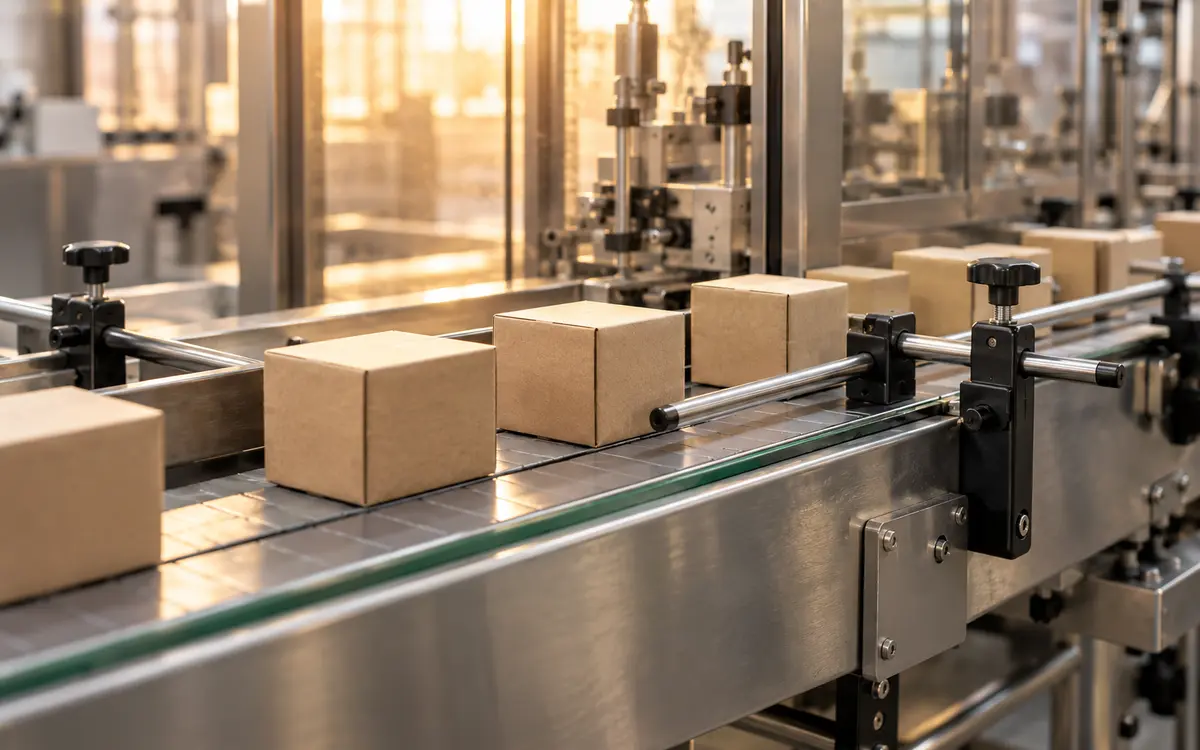
An automated packaging site needs a complete account of the product's movement before the business can judge what the automation achieves. A warehouse movement, an assembly operation and a released shipment describe different results. Their connection matters more than a list of technologies, because the customer receives an accepted product rather than a tally of automated actions. The useful investment question is which actions support that accepted result and which decisions remain outside them.
On March 7, 2024, Manufacturing Dive reported Amgen's opening of a $474 million final assembly and packaging facility in New Albany, Ohio, United States. The report described assembly, labelling and packaging, with automated storage and guided material transport among the planned operating technologies. It did not provide measured productivity gains or an accepted-output total for the new site.
The following analysis proposes a commercial framework for evaluating that kind of automation. It does not prescribe pharmaceutical production methods, estimate Amgen's savings or claim a clinical benefit. Its focus is the path from a documented material status to an accepted delivery, including the ownership of transfers, changes, exceptions and operating records. It keeps final assembly distinct from manufacture of an active substance.
Map the product route before counting automated actions
The proposed route should identify the operations connecting incoming material to the agreed finished product. A list of equipment does not supply this map. The project needs to explain what each operation receives, what it produces and which decision allows the result to proceed. This would make it possible to judge whether an automated action belongs to the complete delivery route or serves a narrower local task.
The map should preserve the customer's boundary. If the customer buys a packaged item, an intermediate assembly is not automatically the same commercial result. Both quantities can be useful, but their relationship needs to remain visible. A model that describes the intermediate as a final delivery would remove unfinished work from the visible account while leaving it inside the actual supply obligation.
Each automated action should therefore have an identified purpose within the route. Moving a material may enable another operation without changing its acceptance status. Recording that distinction would let the review recognise useful handling progress while preventing the action count from becoming an unsupported product-output claim.
Give inventory both a location and a status
A storage account should explain where the material is and what it is available to do. A location record can support retrieval, while a status record supports the decision to use the material for a particular task. The operating proposal should keep both meanings rather than treat physical accessibility as permission for every subsequent action.
If an automated retrieval system receives a request, the account should identify the source of the permitted request and the record supporting it. This is a governance question, not a proposed technical design for Amgen's systems. The project should be able to explain how the requested material and its actual status are connected within the chosen route.
Material awaiting a decision should remain distinguishable from material available for the next operation. The commercial model can include both in an inventory total when its definitions are clear. It should not use the whole total as immediately usable input unless the evidence establishes that status for the quantity represented.
Describe transport as a handoff between responsibilities
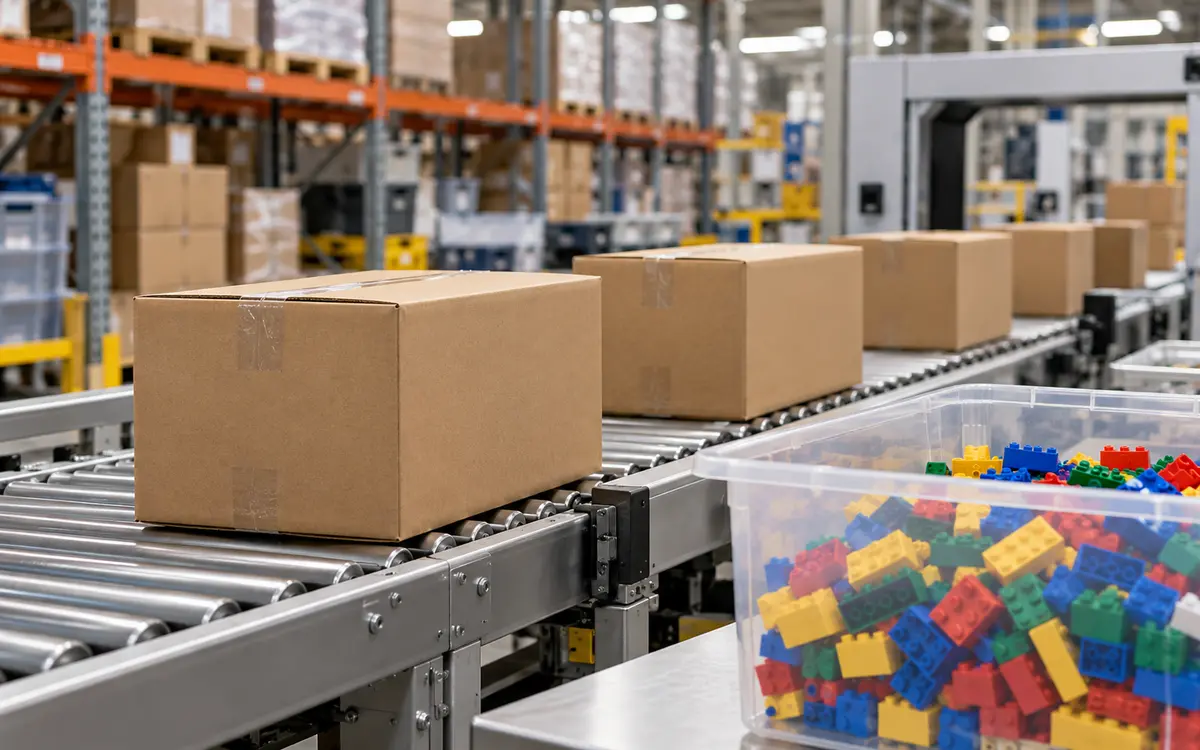
An automated transport task should identify its starting point, destination and completion decision. The delivery of material to a location is different from acceptance by the next operation. A complete account would describe both, allowing the reviewer to understand which responsibility has been discharged and which responsibility begins at the destination.
The route should also name the owner of a mismatch between the request and the received material. It need not publish every internal instruction, but its operational model should identify the decision that resolves the mismatch. An exception without an owner is an open dependency, rather than evidence that the next stage can proceed.
These proposed questions do not assert that any mismatch occurred at the reported factory. They define the evidence needed to evaluate a transport claim. Automated movement can be valuable within its documented purpose without independently proving that every downstream assembly, inspection or shipping obligation has also been completed.
Keep product identity connected through the route
The account should explain how the product definition remains associated with the material as it moves between tasks. A reviewer needs to know which version of the intended output a record represents. If the physical item and its record are handled separately, the proposal should identify the decision that confirms their connection before the next relevant operation.
This analysis does not prescribe identification technology or a manufacturing control standard. It asks for a defined responsibility within the actual chosen route. A technology label alone cannot answer which item a recorded observation concerns or whether the observation remains applicable after an operation changes the form or grouping of that item.
The same principle applies to a packaging configuration. The proposed account should preserve its version and the quantities associated with it. A later configuration may be valid in its own scope, but a business comparison should not change the item definition while presenting the count as though it still represents the earlier agreed product.
Compare complete flow with local activity
The performance model should distinguish local activity from accepted product flow. A count of transport tasks can describe workload. A count of completed assemblies can describe an intermediate operation. A count of accepted deliveries answers a different commercial question. The reviewer should be able to reconcile these quantities without assuming a one-for-one relationship that the route has not established.
Consider a purely hypothetical illustration in abstract units. A period contains 120 recorded material movements and 40 accepted packaged items. The movement count does not establish 120 finished products. If the same cost account contains 80 cost units, its cost per accepted item is two, not the quantity obtained by dividing by movements. These are not Amgen operating figures.
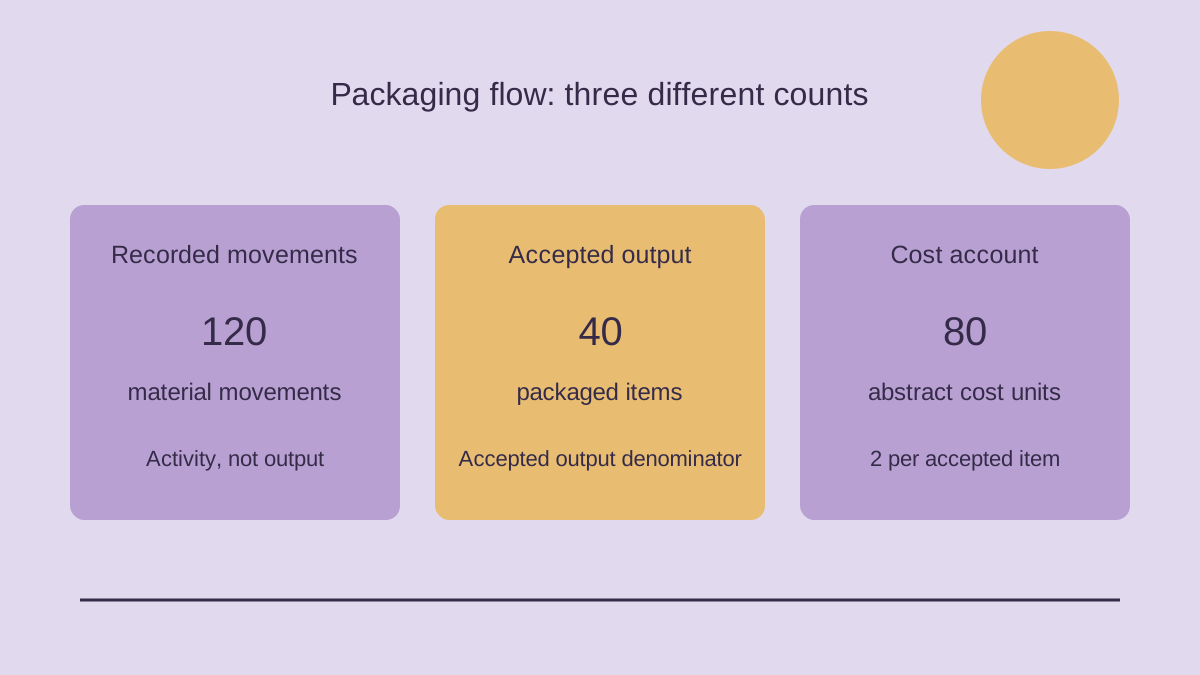
The example does not estimate the actual handling required for a product. It shows why the denominator matters. A local metric can remain useful for its own task while the commercial review uses the complete accepted-output account. Neither should replace the other merely because one produces a more attractive headline.
Assess waiting time with its decision boundary
A proposed flow model should explain the periods during which material waits between operations and the decision that ends each wait. The purpose is to connect the schedule to the agreed task, rather than treat every stationary item as an unexplained failure. Some waits may represent unfinished work; others may represent a planned decision stage. The actual classification requires the route's evidence.
If a model claims a shorter elapsed time, it should preserve the starting and ending events used in the comparison. Changing those events can produce a different duration without establishing a faster complete delivery. The review should identify what was measured, what was excluded and which product configuration the observation represents.
A proposed improvement should also remain separate from a measured improvement. The project can use a scenario to justify further work while naming the evidence needed later. This analysis does not supply a baseline cycle time or assert a realised reduction for the new facility; it defines the comparison needed to assess such a claim.
Give changeovers a defined product and schedule
A commercial schedule should identify the configurations it expects the route to handle and the transition tasks included between them. If the model assumes recurring changes, it should show their place in the period represented. The account should not describe a configuration-specific observation as universal output for every possible sequence of products.
The changeover decision should identify the conditions under which the next agreed task may begin. This is an analytical boundary, not a recipe or an assertion about the site's actual procedures. It would let a reviewer distinguish time assigned to a transition from time available for the operation used in the capacity model.
If the proposed product mix changes, the model should preserve the original schedule and explain the revision. That would make it possible to judge whether a different output total reflects automation, a different task or a changed assumption about transitions. The investment review should not attribute all differences to technology when its own operating question has also changed.
Evaluate exceptions without hiding them from the account
The operating proposal should identify how an exception is recorded, who can decide its next status and what quantity it affects. A completed automated action does not necessarily close an exception elsewhere in the route. The account needs to keep unresolved conditions visible until an appropriate decision actually changes them.
Where work is repeated, the model should distinguish the repeated activity from additional accepted output. Counting the repeated action can be useful for workload and cost analysis. It should not inflate finished production. The same item may appear in several operational records while remaining one item for the external transaction.
An exception record can also support a targeted review of the model. If a recurring issue changes the expected route, the project should explain the effect on schedule and cost within the evidence available. This framework makes no assertion that the actual plant experienced any particular issue or that a proposed remedy has been demonstrated.
Make training accountable to an operating responsibility
A training proposal should name the task a participant is expected to perform and the decision recognising readiness for that task. Attendance and task readiness can be related, but the account should not assume they are identical. The business model needs to identify the operating responsibility that the training is intended to support.
If digital instructions or remote assistance form part of the proposal, their scope should be stated. The review should ask which version of the task they represent and who owns an update when the operation changes. This analysis does not infer that any particular training technology improves performance or replaces the responsibilities required by the chosen operating arrangement.
The handover should preserve access to the relevant records after project completion. A demonstration used during implementation may not by itself support routine operation if its meaning cannot be recovered by the team. Clear ownership would allow later changes to be assessed against the original task rather than judged solely by whether the technology is still present.
Include maintenance and temporary operation in the model
The complete account should identify maintenance responsibilities and the conditions under which an operation is considered available. An equipment delivery does not independently establish its availability for every future period. The schedule should distinguish the assumptions used for planning from the observations later used to assess actual operation.
If a temporary arrangement is proposed, its task, acceptance and cost should be visible. The account should not assume that a temporary route has the same scope as the original route without evidence. Nor should it silently treat a temporary arrangement as indefinite recurring supply. Its usefulness can be recognised within the period and responsibility it actually represents.
A later performance report should retain the effect of maintenance or temporary operation when those events belong to the stated comparison. Excluding a period can be legitimate if the revised question is explained. An unexplained exclusion, however, would change the commercial account while leaving the reader to assume that the complete operating period was still represented.
Keep the investment boundary consistent
The cost model should explain which parts of the complete route the investment includes. Storage, handling, assembly, packaging, operating handover and related responsibilities need identifiable boundaries where they apply. A capital total is not by itself a measured cost per accepted item, and it should not be presented as proof of a realised return.
If another team or supplier carries a related obligation, the complete route should still identify it. A cost outside one budget may remain necessary for the customer result. Comparison with an alternative should purchase the same service, rather than compare one complete route with an equipment price that leaves other work unnamed.
The post-project comparison should preserve the distinction between expectations and observations. An estimated benefit can support a decision for further review, while a realised claim needs its actual period, output and expenditure. This analysis provides no actual margin, saving or investment-return estimate for the reported factory.
Report automation at the level its evidence supports
A technology description should state the task it performs and the evidence of its operating result. A system can be installed without every commercial benefit already being demonstrated. A business report should distinguish installation, accepted operation and measured output, keeping each useful milestone within the scope the records support.
The same discipline applies to safety, environmental and clinical claims. An automated movement or assembly task does not establish those broader conclusions by itself. They would require their own evidence and boundaries. This framework makes no finding about medicine effectiveness, regulatory permissions, environmental superiority or the reported site's comparative safety performance.
The purpose is to make the automation question testable. A defined task with a recorded outcome gives the team a basis for improvement and revision. A general assertion that digital equipment makes the whole factory better cannot identify which responsibility changed or which commercial result the evidence actually establishes.
The endpoint is a traceable accepted delivery
A useful investment review would connect each automation claim to the route ending at the agreed customer boundary. The following sequence would give that review a clear set of decisions rather than an equipment tally:
- Define the product and the accepted-delivery unit.
- Map material location, status and ownership of each handoff.
- Reconcile movements and intermediate counts to unique accepted output.
- Preserve the product configuration and comparison period.
- Keep exceptions, training and maintenance inside their responsibility account.
- Report measured benefits separately from planned capabilities.
The New Albany opening provides a reason to examine this sequence. It does not complete the later operating comparison. If subsequent evidence connects the automated tasks to repeatable accepted deliveries and a complete cost account, it would support a more specific business conclusion. Until then, the useful question is what the documented automation enables along the product route, and what remains to be demonstrated before its proposed commercial benefits can be reported as achieved.
Sources: Manufacturing Dive.

Leave a comment