

A February 2, 2026 Manufacturing Dive report describes Eli Lilly's planned facility in Lehigh County, Pennsylvania, in the United States. The proposed investment exceeds $3.5 billion, with operations expected in 2031 and production intended to include injectable medicines and injection devices. The industrial question is how the two production subjects would be connected through a defined qualification programme, rather than treated as interchangeable measures of capacity.
Define the product combination before estimating supply
A manufacturing programme involving a medicine and a device would need to identify the combination being considered before estimating an application-specific supply quantity. The medicine, the device and the intended presentation would each need their own description. An announcement that a site is intended to manufacture both subjects does not establish that every possible combination has been evaluated or that a particular combination is available for delivery.
A prospective planning record could therefore begin with the defined product and the question that the programme is intended to answer. That record would make it possible to distinguish a facility-development milestone from a product-development milestone. The historical report describes a planned site, not a completed programme for every medicine-and-device combination. Keeping that distinction visible would help a partner understand which evidence belongs to the factory project and which remains relevant to an identified product.
Keep component readiness and combined readiness separate
A component could have an identified manufacturing record without establishing the readiness of the proposed combined presentation. A planning programme could preserve the medicine-side and device-side records separately and then identify the evidence needed at their interface. This is a proposed structure for evaluating a manufacturing question, not a description of the company's actual procedures or a claim that a particular component has already passed them.
The combined record would need to say which versions and quantities were brought together for evaluation. If one component changes, the relevance of the previous comparison becomes a separate question. A development team could identify that question explicitly instead of assuming that the unchanged component makes the entire combination unchanged. This would allow the next trial to address an identified interface issue without treating the general capacity announcement as a substitute for product-specific evidence.
Use an interface record for the next trial
A proposed interface record could connect the selected medicine presentation, the selected device version and the purpose of the trial. It would identify what is being evaluated and which observations would support the next decision. The record would not need to claim that the entire commercial programme is complete. Its usefulness would lie in making one development step interpretable and in showing what would remain unresolved even after a favourable result.
Where a partner proposes a change, the record could preserve the previous arrangement as a reference and identify the revised arrangement separately. Several simultaneous changes might be necessary for a trial, but their effects should not be silently attributed to one change alone. The programme could acknowledge the limits of that comparison. This would keep the reasoning traceable as the project moves from a broad manufacturing intention to evidence about an identified combination.
Separate factory completion from usable output
The expected operating year is a future milestone in the historical report. It should remain a forecast rather than a statement that the site is already producing accepted product. A programme could distinguish construction completion, equipment readiness, trial activity and accepted output wherever those stages are relevant to the intended project. The announcement does not establish the completed status or dates of all those stages.
A purchasing or planning discussion could state which stage is relevant to the decision being considered. A facility milestone might support one decision while an accepted-product record is needed for another. Treating them separately would not deny the significance of the announced investment. It would prevent a future construction or operating expectation from becoming an unsupported delivery commitment for a specific product. The next record would need to connect the relevant milestone to the evidence actually available.
Choose the denominator for combined capacity
A capacity discussion could distinguish units of one component from complete presentations accepted under a defined programme. Those quantities answer different questions. A large quantity available on one side of the proposed combination would not automatically establish the same quantity of complete output. A meaningful account would identify the combination and the conditions under which its output is counted, rather than combine incompatible component quantities into a single supply figure.
The planning record could also keep trial material, accepted output and material retained for further evaluation separate. This would help a partner understand which quantity is being used in a forecast and what assumptions connect it to an intended supply requirement. The historical article does not supply a complete component balance or a realised output rate for the proposed site. This analysis therefore does not calculate a factory throughput or assign a number of finished presentations to it.
A hypothetical component-balance example
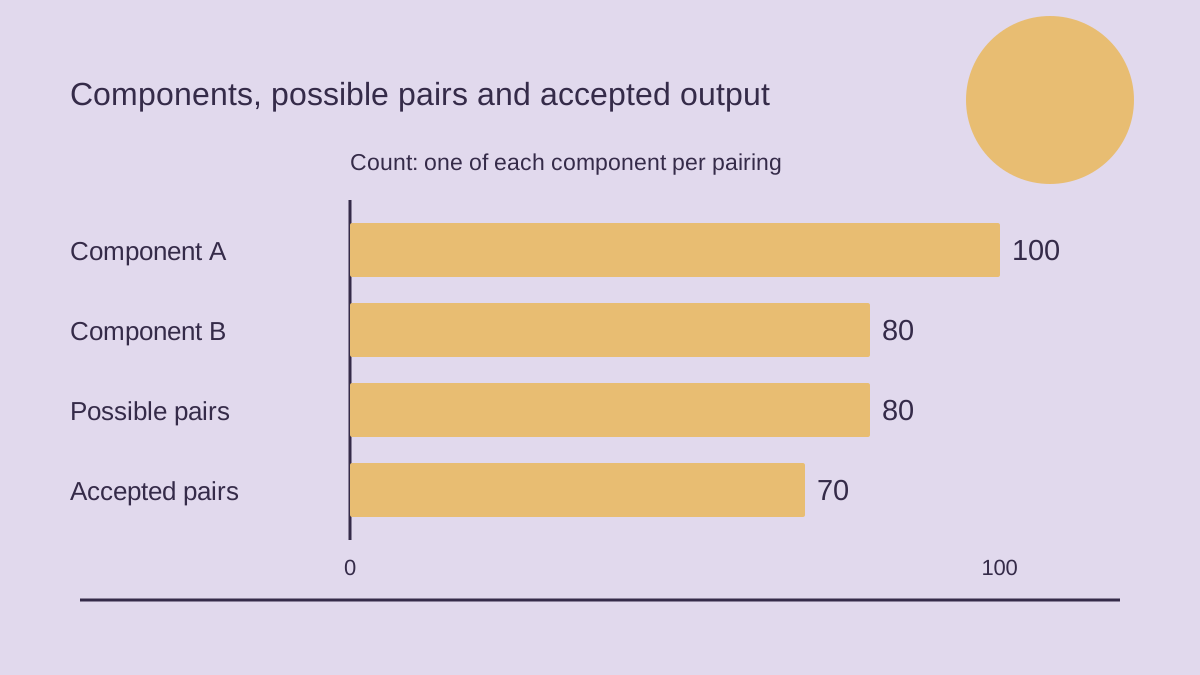
Consider a hypothetical programme with 100 units available on one component side and 80 units available on the other, where the defined presentation would use one unit from each side. At most 80 pairings could be considered before any acceptance assessment. These invented quantities are not results or forecasts for the Lehigh County project. They illustrate why the larger component count cannot by itself be described as the quantity of complete presentations.
Suppose the same hypothetical programme then identifies 70 accepted pairings under its defined checks. The accepted-output quantity would differ again from the count of possible pairings. The example does not prescribe a production method or establish a real acceptance rate. It shows the importance of retaining the counting boundary. A development account could then distinguish available components, proposed combinations and accepted output without silently moving between those quantities when discussing capacity.
Make version changes visible
A development programme can encounter changes in a component, its documentation or the arrangement used to bring components together. A proposed change record could identify the version before and after the change and the question the revision is intended to resolve. This would let a partner assess whether previous observations still apply to the revised combination. An unchanged project name would not, by itself, establish an unchanged product arrangement.
Where the change affects only part of the programme, the record could identify that limited scope. It should not imply that every other result has been invalidated or that every other result remains applicable without review. The useful question would be which previous evidence supports the next decision and which evidence needs to be collected again. This is an original development framework, not an assertion about a particular change already made by the company.
Connect identifiers across production subjects
A proposed trial record could link the identities of components brought together and the identity of the resulting evaluation unit. That connection would allow later observations to be attached to the arrangement actually tested. If a component identity is lost during handover, a favourable result may become difficult to interpret. The programme could therefore treat the identity connection as part of the evidence rather than as an administrative detail separate from the development question.
The record could also retain the location and procedure revision associated with the trial wherever they matter to interpretation. This would not establish that the proposed site already operates a completed tracking system. It would give a partner a way to ask what information is needed for a meaningful evaluation. A result connected to an identified combination would be more useful than a result described only as having come from the manufacturing programme in general.
Define the scope of acceptance
An acceptance decision should identify its limited purpose. Acceptance of a trial sample for another evaluation step would not necessarily establish acceptance for recurring supply. A programme could record the decision, the evidence considered and the next use permitted within the programme. This is a proposed way to structure industrial development decisions; it does not state a regulatory rule or assign a legal status to any product.
The same distinction would matter when a result is communicated outside the immediate trial team. A brief description could retain the purpose of the acceptance so that a partner does not interpret it as a wider approval. The historical article contains a manufacturing plan, and that plan should not be used to infer a completed product approval. Clinical outcomes, treatment decisions and regulatory status would require their own authoritative evidence and are not evaluated in this industrial analysis.
Use explicit gates before expanding the programme
A staged programme could identify the evidence needed before the next production or collaboration commitment. The gate might concern a component identity, an interface comparison or a complete accepted-output record. Its purpose would be to answer a defined question rather than to promise eventual commercial success. A mixed result could still be informative if the team knows which question the trial addressed and which limitations remain after it.
- Identify the medicine-and-device combination and the purpose of its evaluation.
- Keep component readiness separate from readiness of the combined presentation.
- Preserve versions and identities across the interface record.
- Distinguish available components, possible pairings and accepted complete output.
- State the scope of each acceptance decision before expanding the next commitment.
These gates are original proposals for reviewing development evidence. They are not reported corporate procedures, formal approval requirements or a manufacturing specification. A project team and its partners could adapt them to the actual programme. Their value would lie in making a capacity discussion depend on identifiable product evidence while preserving the future status of the announced facility.
Plan the handover between teams
A programme spanning different production subjects could define what information accompanies a handover between teams. The record might identify the components, the planned evaluation and the unresolved questions. A handover without an agreed question can generate observations that are difficult to connect to the original decision. A more defined handover would support continuity without assuming that all receiving teams interpret the same brief description in the same way.
The programme could also identify how the receiving team reports changes made after handover. If an arrangement is modified before evaluation, the observation should remain connected to the modified arrangement rather than be silently attributed to the original one. This is a proposed collaboration structure, not a report that the company already uses it. Its purpose would be to preserve a clear path from the product definition to the evidence used for the next industrial decision.
Retain interrupted and disputed trials
An evaluation can produce an interruption, an uncertain observation or disagreement about whether a unit meets the proposed description. The programme could retain those outcomes with their identities and reasons for uncertainty. Removing them without explanation would make it difficult to assess how representative the favourable observations are. A repeat trial could then address a specific unresolved question rather than serve as a search for a more convenient result.
If the team changes its interpretation, the revised decision could remain connected to the earlier record. This would let a partner follow the reasoning without reconstructing it from memory. It would not imply that a disputed trial establishes a defective product or that a favourable repetition eliminates every open question. The relevant conclusion would remain tied to the defined combination, the conditions observed and the purpose of the evaluation.
Discuss supply without assuming patient access
A proposed manufacturing programme and an available supply arrangement are separate subjects. A partner could identify the product and the quantity needed for its planning while leaving availability and delivery terms to specific confirmation. The factory announcement does not establish inventory, an accepted customer allocation or a delivery schedule. Its future operating expectation should therefore remain separate from any claim that an identified product can already be supplied.
Patient access is a further question that the manufacturing announcement cannot answer on its own. This analysis does not infer treatment availability, clinical benefit or a patient's eligibility from the planned production site. The industrial contribution is narrower: identifying what evidence would connect the medicine-side and device-side programme to a defined accepted output. That contribution can be examined without making medical recommendations or converting a future facility plan into an assertion about available care.
Build an investment case around the interface evidence
A prospective industrial investment case could show which milestones are supported by observation and which remain forecast. It could identify the defined combination, the current development record and the next uncertainty to be investigated. An announced capital amount is not a substitute for that evidence. The historical investment figure describes the proposed project; it does not establish the realised economics of accepted output or a demonstrated improvement in production reliability.
The next commitment could then be assessed as a way to answer a specific interface or production question. That approach would preserve the significance of the factory plan while avoiding an assumption that every later stage will succeed automatically. The useful next record would connect the proposed facility milestone to product identities, trial boundaries and accepted-output evidence. It would make the path from manufacturing intention to a qualified combination reviewable, with the remaining decisions visible rather than treated as already complete.
Sources: Manufacturing Dive.





Leave a comment